Author: Senthil Kumar, Technical Director | Updated: October 2026
Table of Contents
- Core process exchangers (reaction, distillation and evaporation)
- Compact and high-efficiency heat exchangers
- Specialised heat recovery and thermal utility exchangers
- Pressure vessels, separators and storage equipment
- Utility, machine and overhead cooling systems
- Metallurgy mapping for chemical compatibility
- Application Summary by Sub-Sector
- Frequently Asked Questions
Chemical and petrochemical plants ask a lot of thermal equipment. Streams can be acidic, viscous, crystallising or prone to fouling, reactions release or absorb heat in step with the product, and every unit has to hold up against a specific mix of solvents, chlorides and acids. United Heat Exchangers (UHE) is a Coimbatore manufacturer that has been fabricating industrial heat transfer equipment since 1989. This page walks through the exchangers, condensers, vessels and alloys we supply to petrochemical and chemical processing customers.
Core process exchangers (reaction, distillation and evaporation)
Heat transfer where chemistry actually happens: reaction loops, distillation columns and evaporators.
Shell and Tube Heat Exchanger
Core process exchangers (reaction, distillation and evaporation)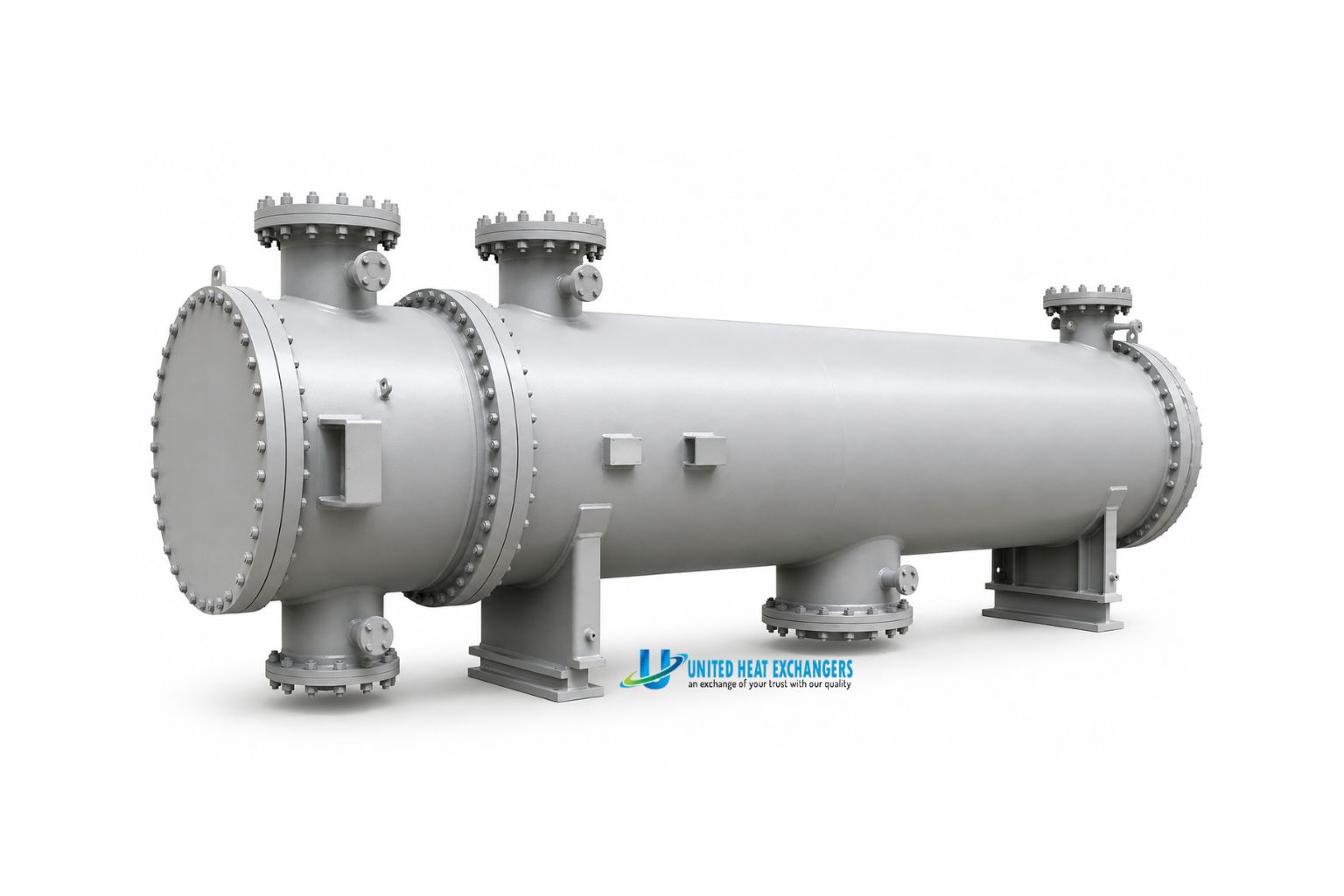
The standard choice for heating process fluids, condensing vapours and cooling streams across chemical synthesis loops.
- Used for: process heating, vapour condensation, fluid cooling in synthesis loops
Kettle Reboiler Heat Exchanger
Core process exchangers (reaction, distillation and evaporation)
An enlarged shell gives vapour room to disengage from the boiling pool, which suits solvent and monomer separation at the base of a column.
- Used for: distillation column reboiling, solvent and monomer separation
Reactor Type Heat Exchanger
Core process exchangers (reaction, distillation and evaporation)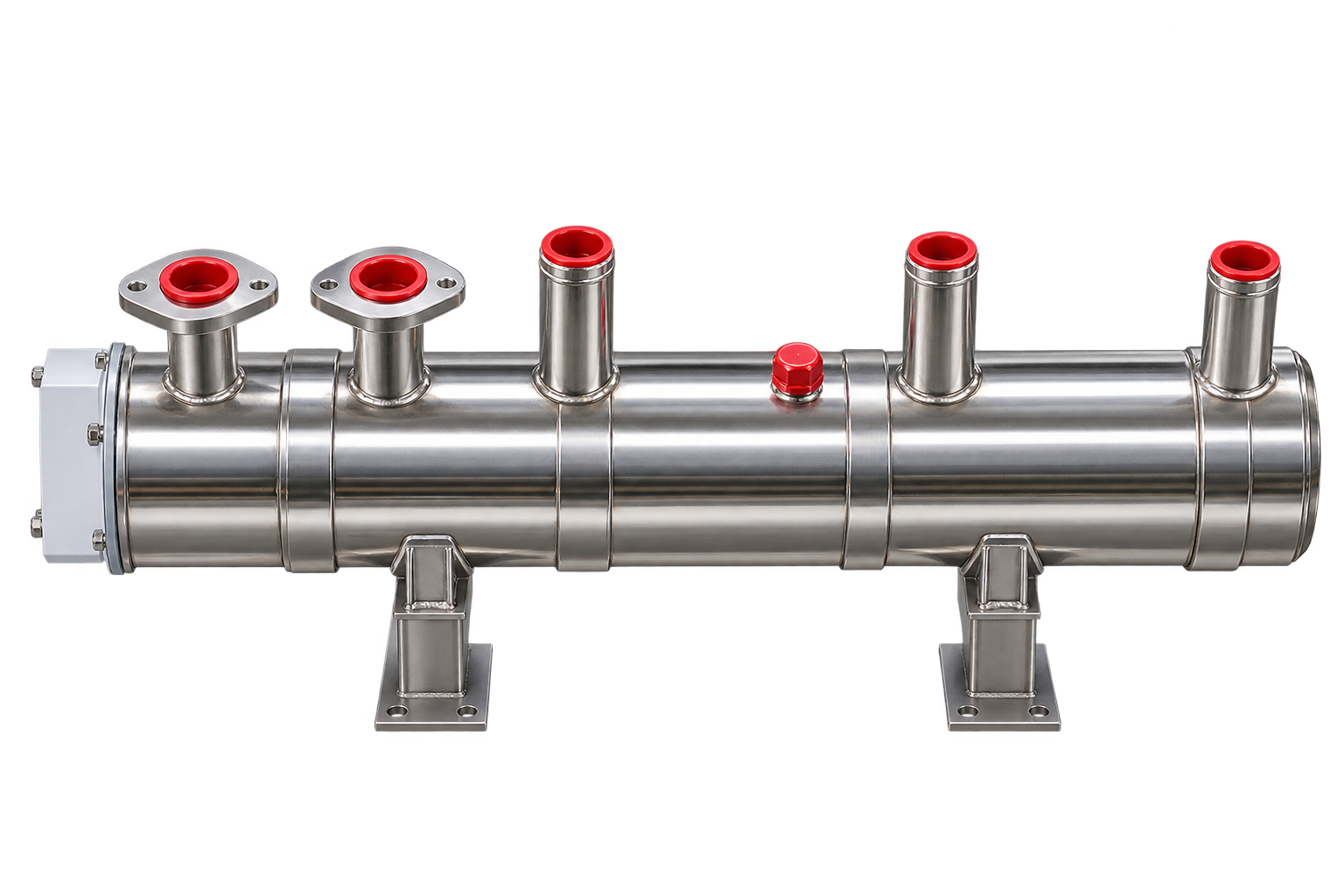
Builds heat transfer into the reaction zone itself, so exothermic reactions can be held at temperature in jacketed or tubular vessels.
- Used for: exothermic reactions, jacketed and tubular reaction vessels
Refluxer Condenser / LEF Condenser
Core process exchangers (reaction, distillation and evaporation)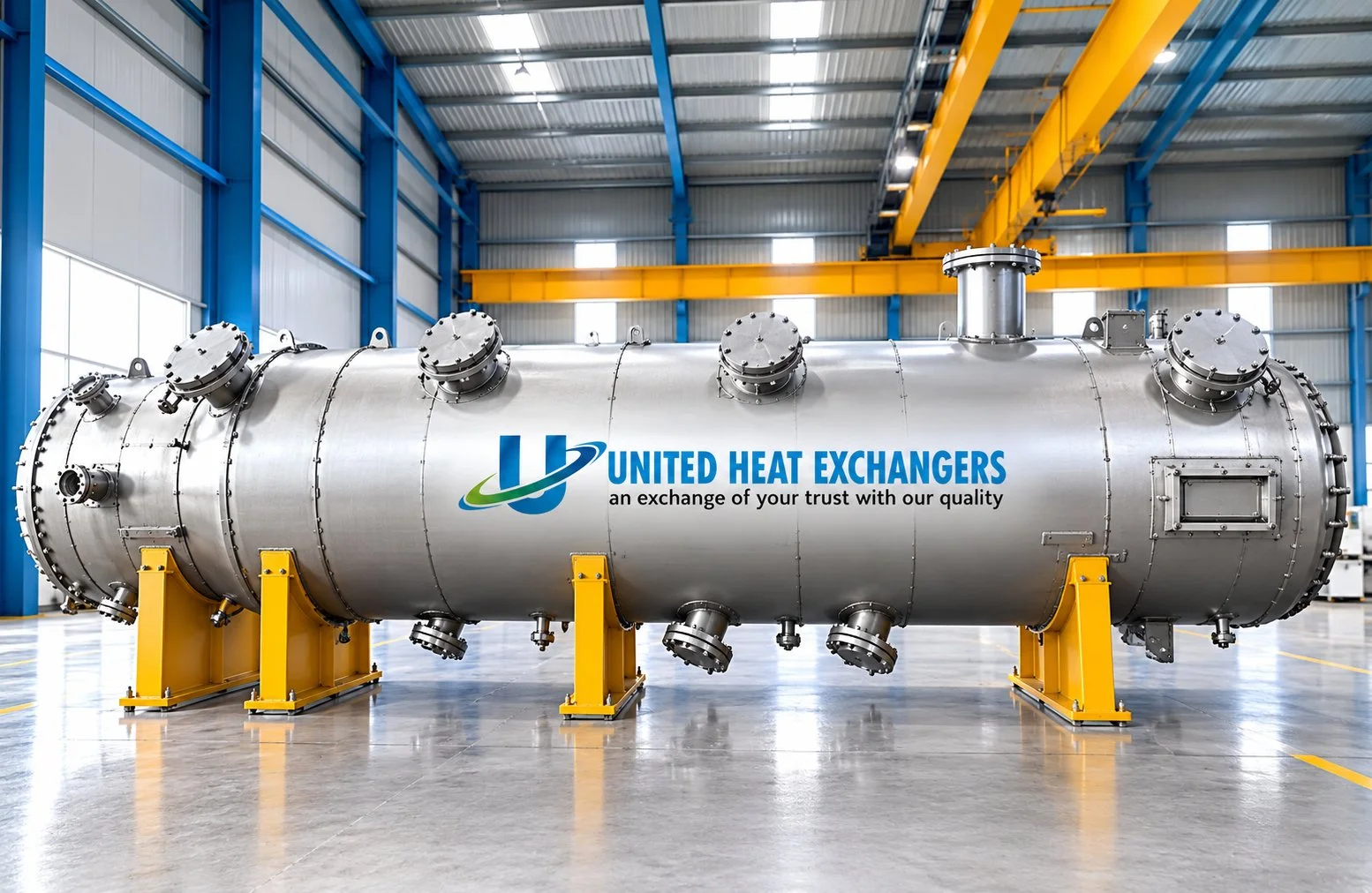
Sits directly on a distillation column, condensing overhead vapour and returning a steady reflux stream for tighter separation.
- Used for: overhead condensing, continuous reflux control
Vertical Shell and Tube Heat Exchanger
Core process exchangers (reaction, distillation and evaporation)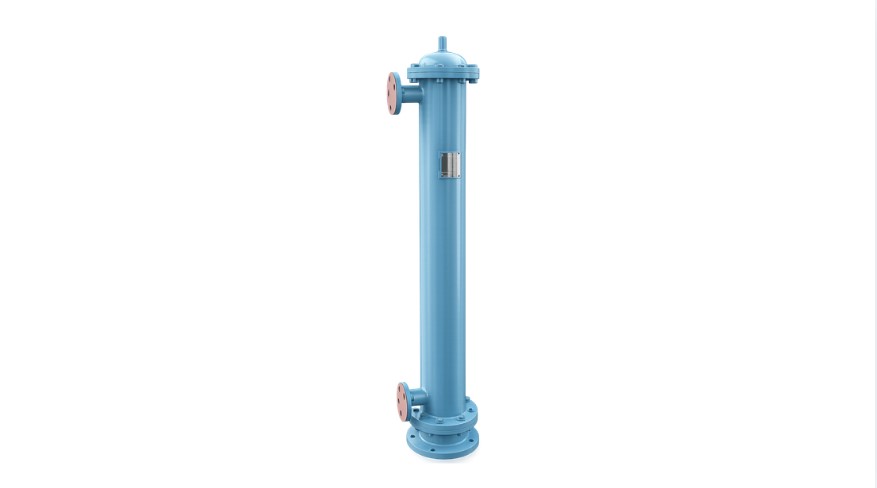
An upright layout saves plot space and supports falling-film evaporation and vacuum duties.
- Used for: falling-film evaporation, vacuum distillation, space-constrained layouts
Spiral Heat Exchanger
Core process exchangers (reaction, distillation and evaporation)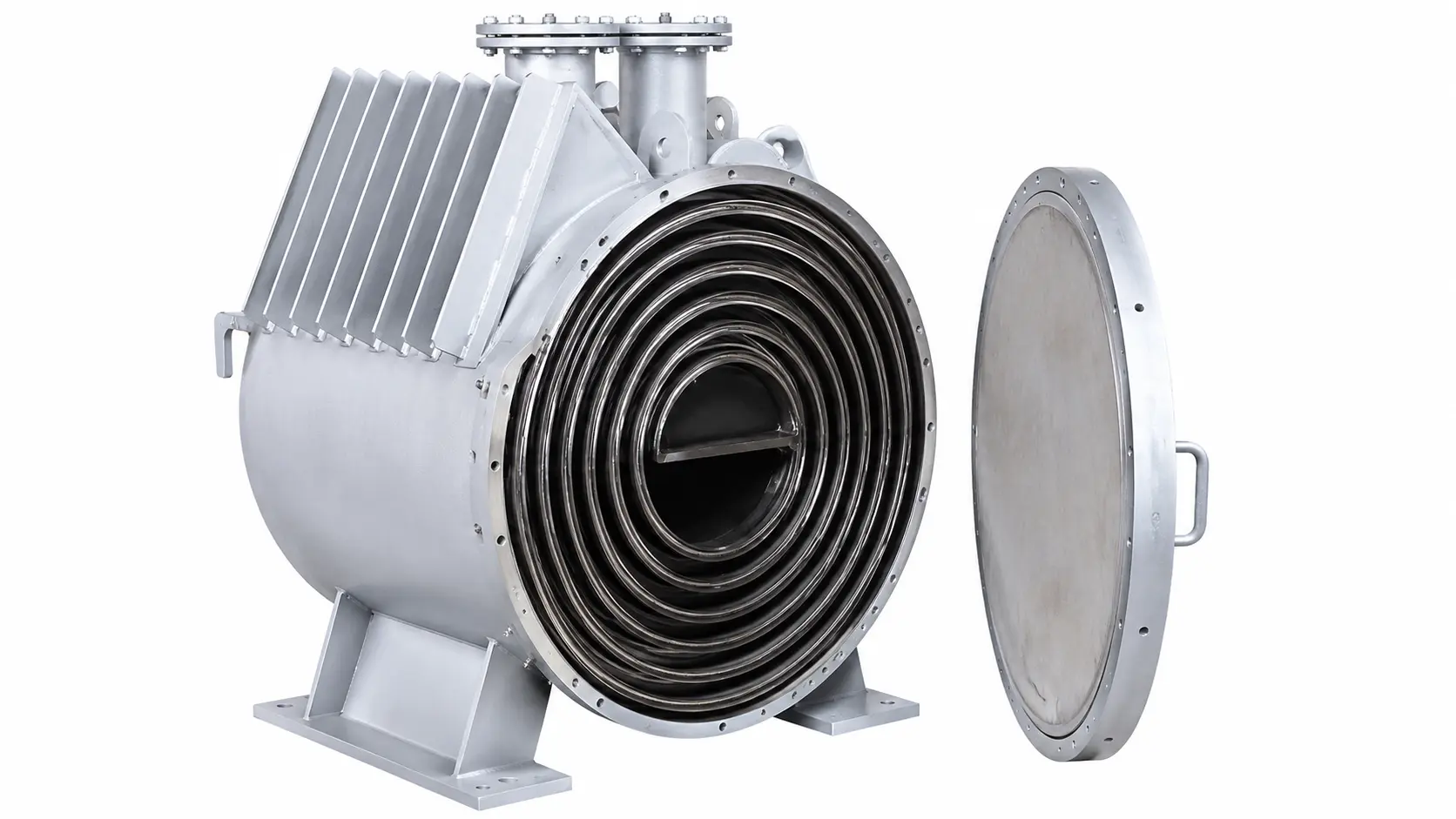
A single spiral channel flushes itself clean, which helps with sticky media that would block a conventional bundle.
- Used for: fouling chemical media, viscous polymers, slurries, organic waste streams
Dynamic Scraped Surface Heat Exchanger
Core process exchangers (reaction, distillation and evaporation)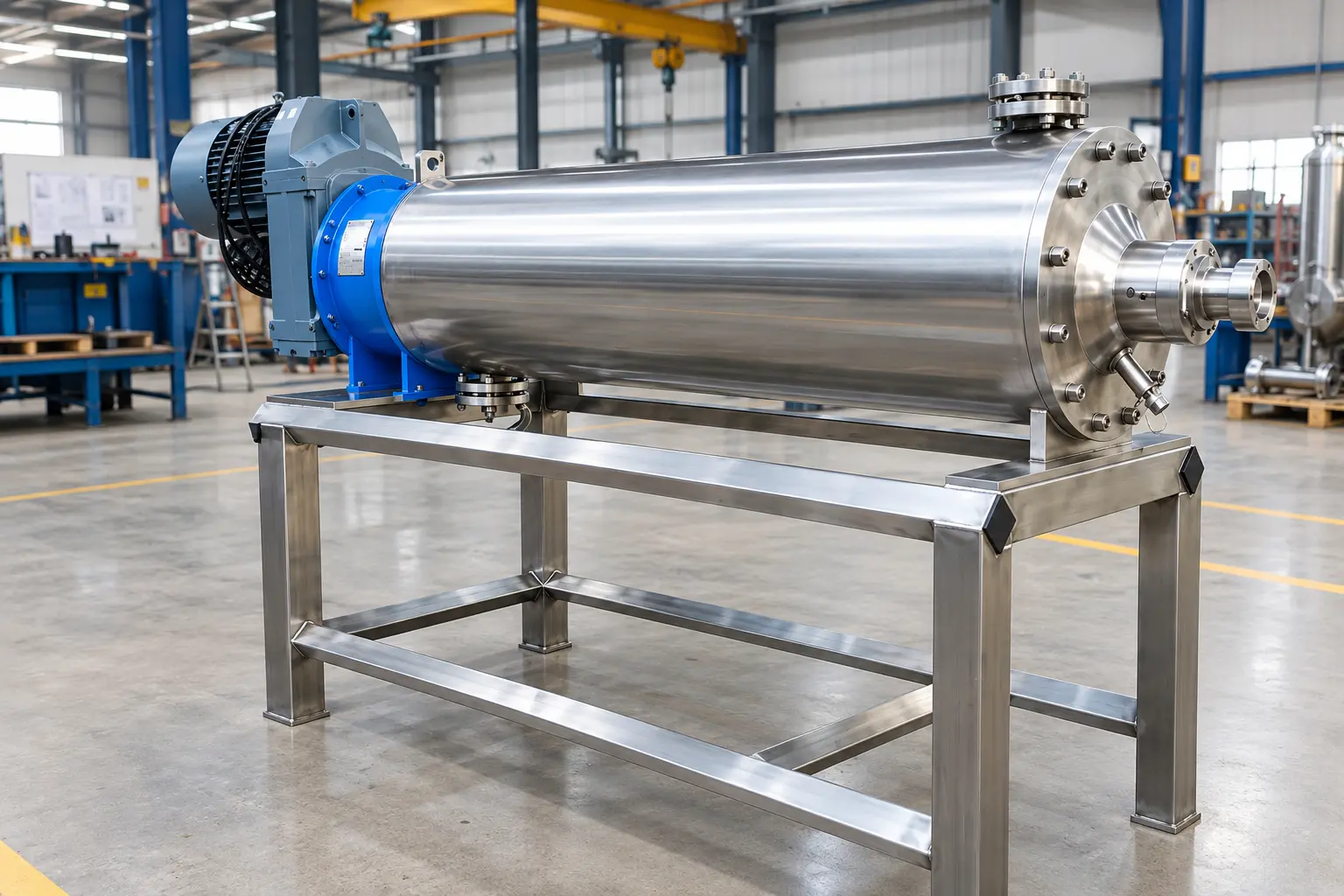
Rotating blades keep the heat transfer wall clear, so viscous and heat-sensitive products can be processed without baking on.
- Used for: high-viscosity resins, crystallising solutions, heat-sensitive organics
Compact and high-efficiency heat exchangers
Small, light and quick to respond, for plants where footprint, weight and thermal efficiency matter.
Plate Heat Exchanger / Compact Heat Exchanger
Compact and high-efficiency heat exchangers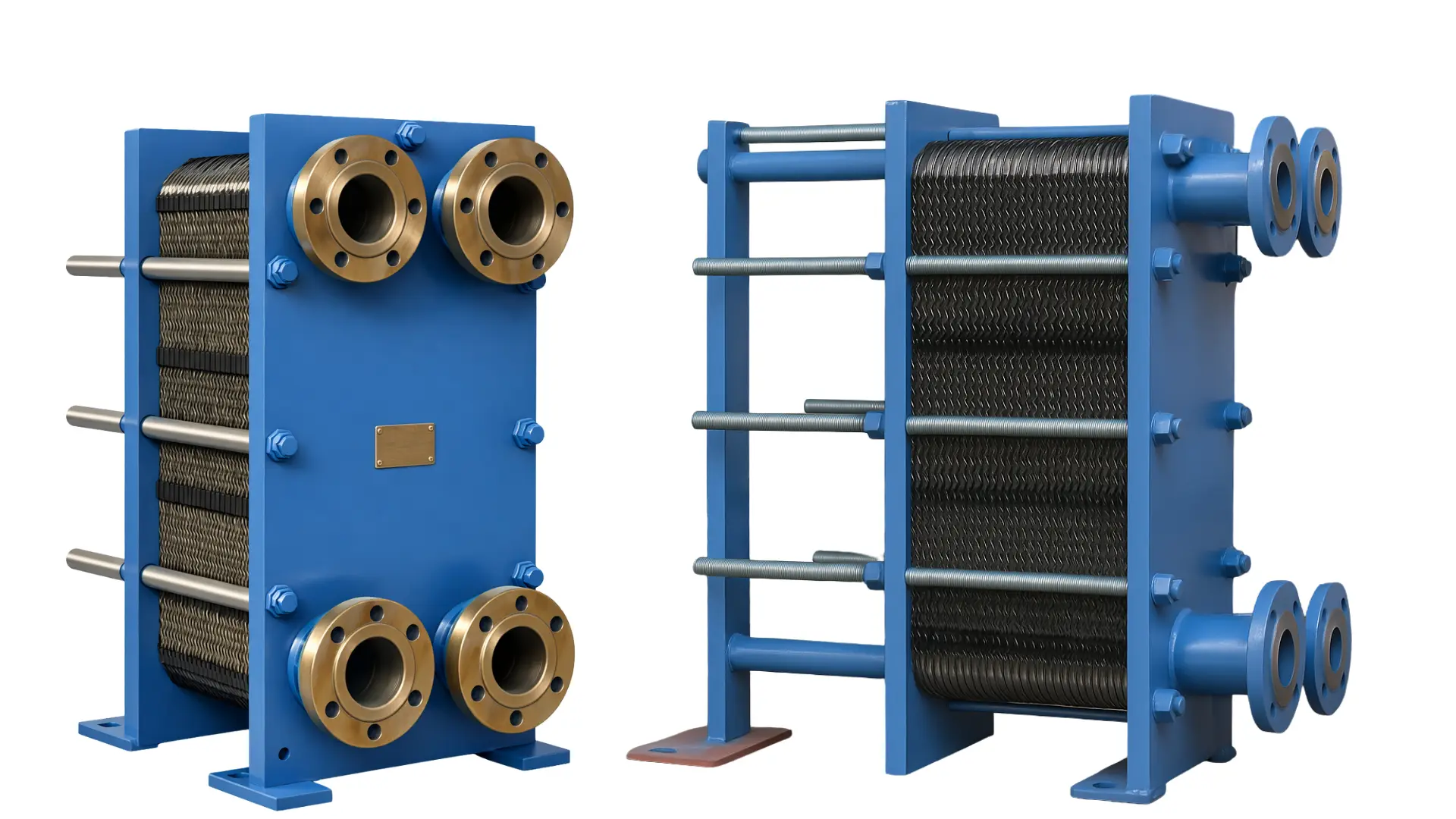
Thin corrugated plates give high efficiency on clean fluids and a fast thermal response when process conditions change.
- Used for: clean fluid-to-fluid exchange, process cooling water loops
Plate and Shell Heat Exchanger
Compact and high-efficiency heat exchangers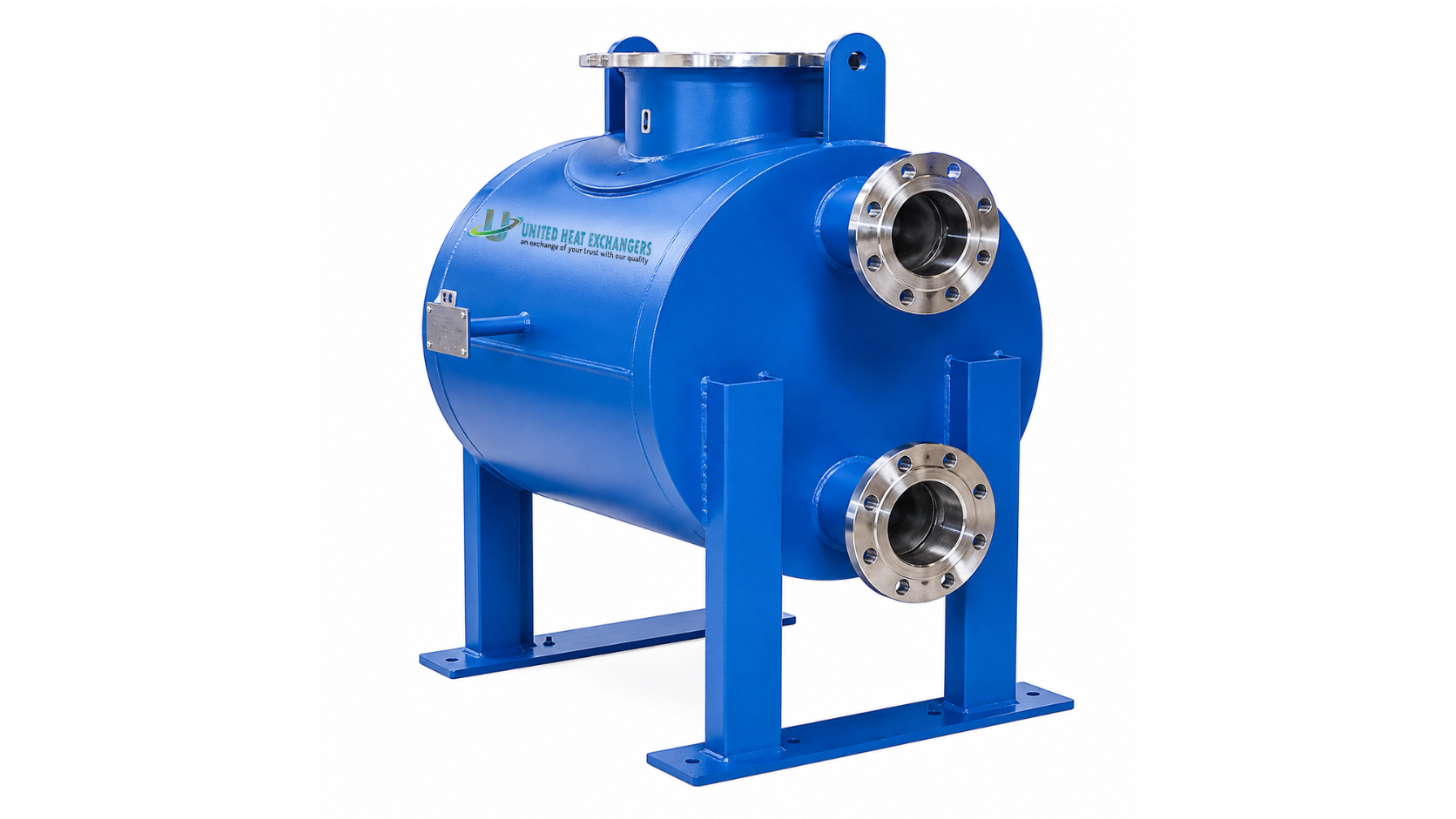
A welded plate pack inside a pressure shell, pairing the compact size of plates with the pressure and temperature range of shell and tube.
- Used for: high-pressure and high-temperature compact duty
Brazed Plate Heat Exchanger
Compact and high-efficiency heat exchangers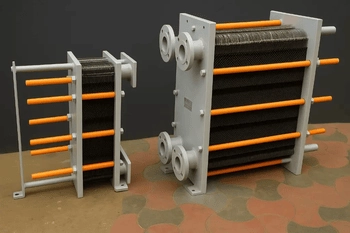
A sealed, brazed plate pack in a small body that fits chiller skids and packaged units easily.
- Used for: compact chiller skids, solvent recovery units, closed-loop process cooling
Printed Circuit Heat Exchanger (PCHE)
Compact and high-efficiency heat exchangers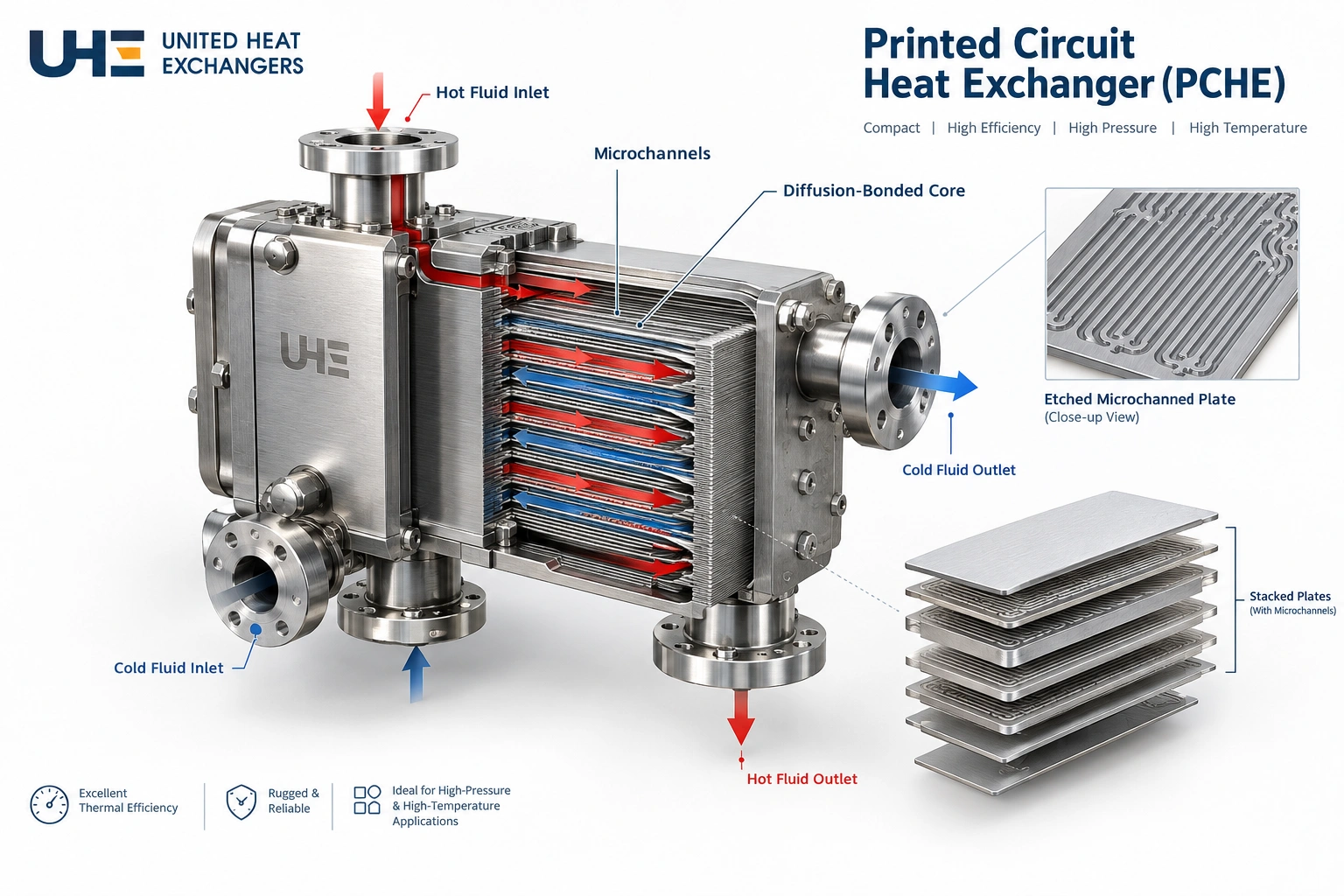
Etched plates are diffusion-bonded into a solid block, packing a large surface into very little volume at high pressure.
- Used for: high-pressure gas processing, ultra-compact modular chemical plants
Specialised heat recovery and thermal utility exchangers
Equipment that recovers waste heat or supplies high-temperature heating, cutting the utility load of the whole plant.
Heat Recovery Reboiler / Regenerative Heat Exchanger
Specialised heat recovery and thermal utility exchangers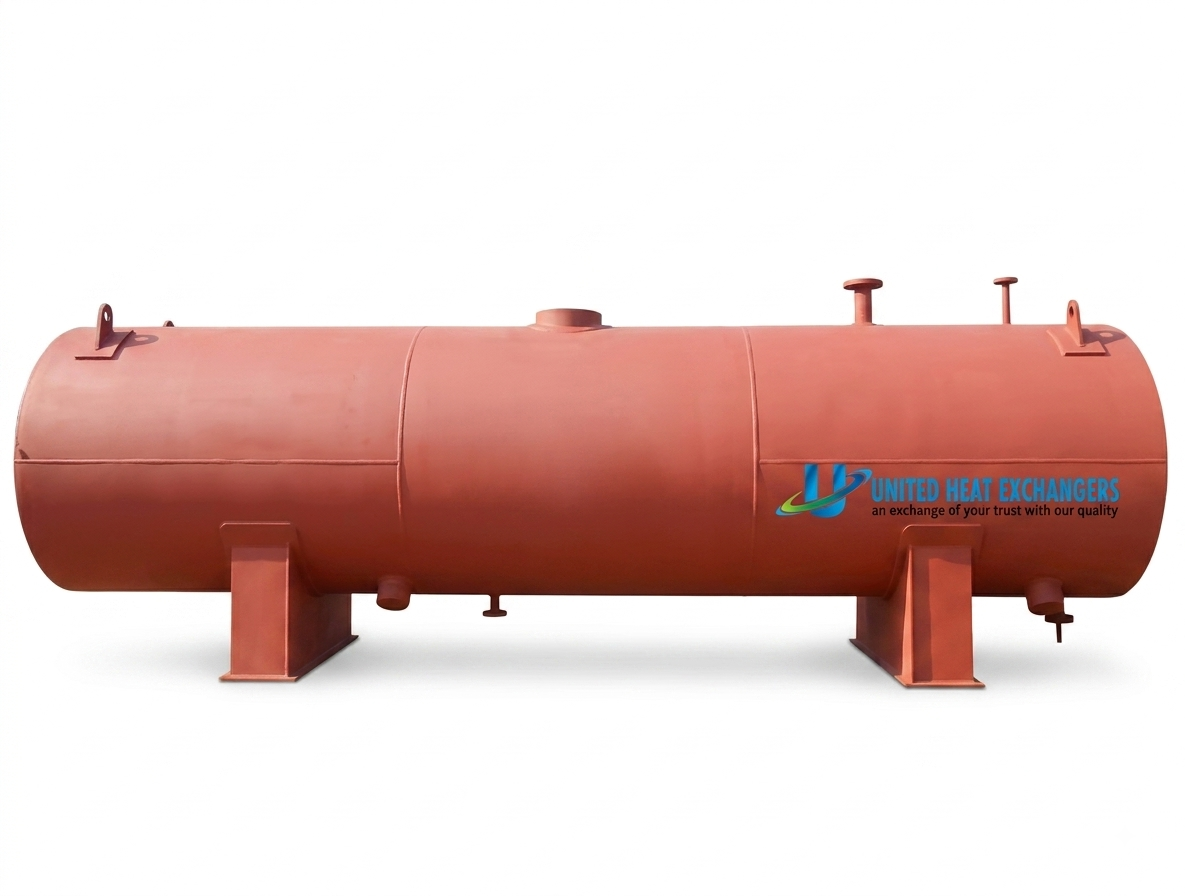
Takes heat from hot process streams or effluents and uses it to warm incoming feed, lowering fuel and steam demand.
- Used for: waste heat recovery, feedstock preheating
Flue Gas Air Preheater / Air Preheater
Specialised heat recovery and thermal utility exchangers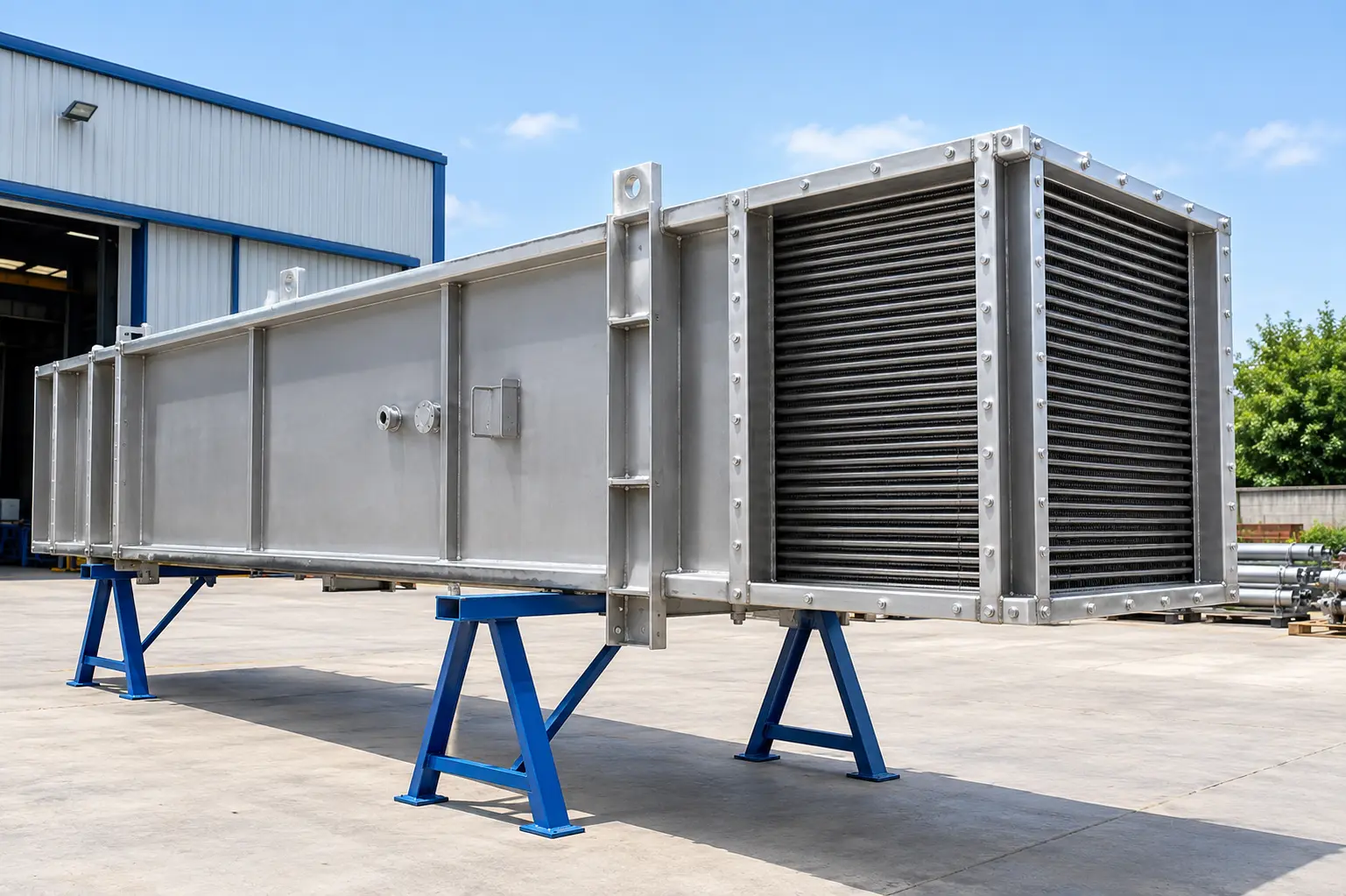
Moves heat from outgoing flue gas into combustion air, raising the efficiency of fired equipment.
- Used for: cracking furnaces, steam boilers
Thermal Oil Heater
Specialised heat recovery and thermal utility exchangers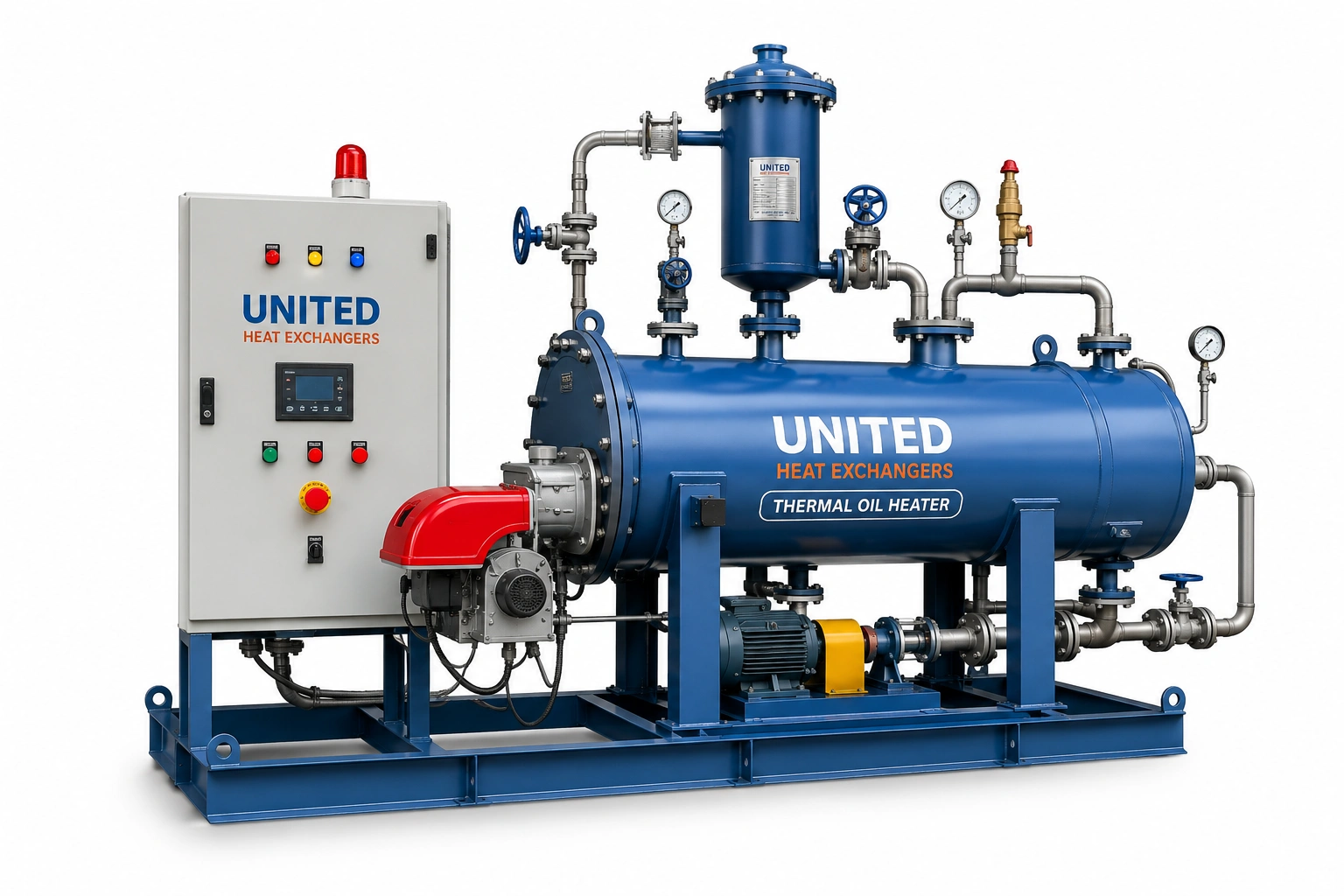
Delivers indirect heating above 300 °C without the high operating pressure that steam would need at that temperature.
- Used for: high-temperature process heating above 300 °C
Feed Gas Chillers
Specialised heat recovery and thermal utility exchangers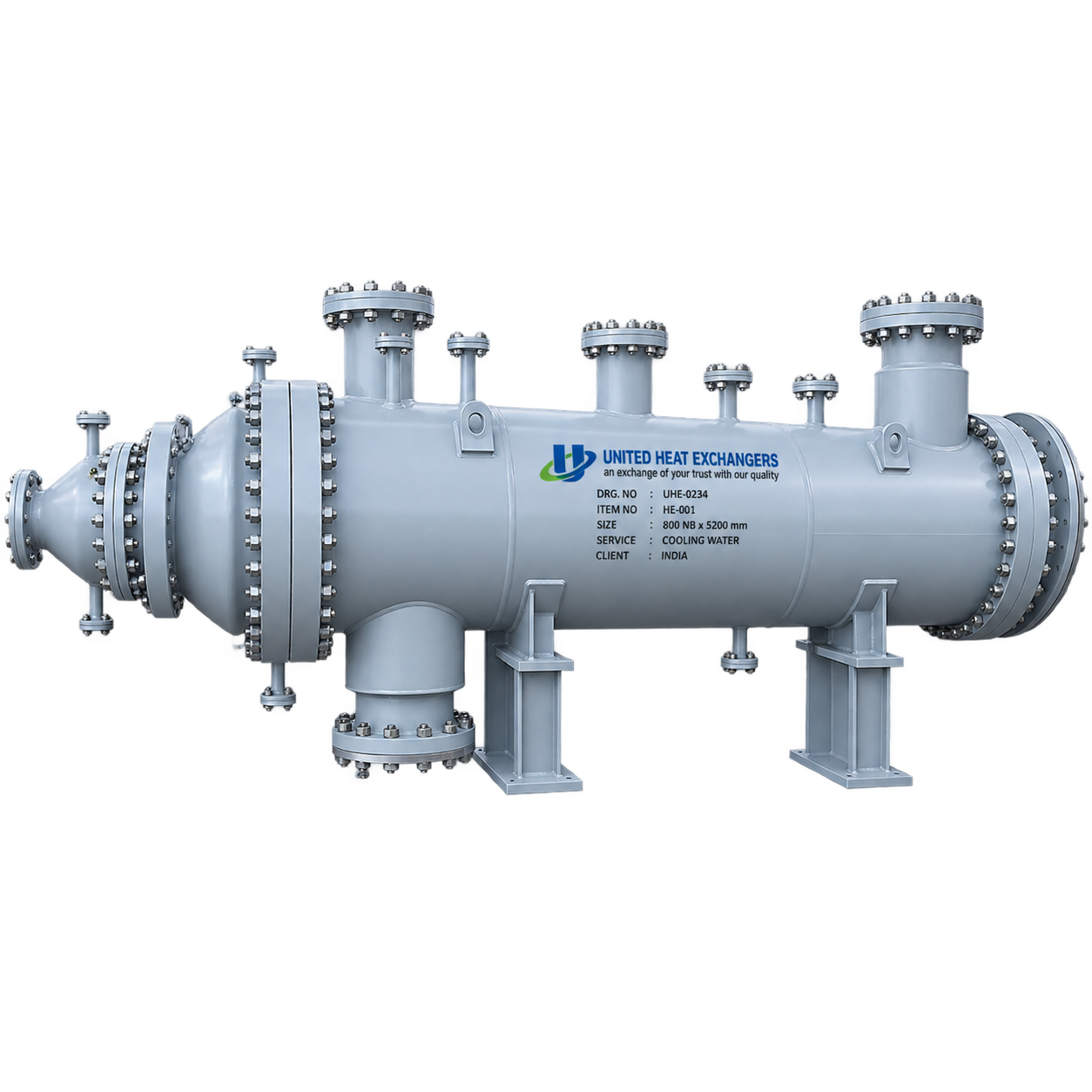
Cool process gas to the point where heavier components condense out, a core step in separation and purification loops.
- Used for: gas separation, deep condensation, chemical gas purification
Pressure vessels, separators and storage equipment
Containment, treatment and utility-air equipment built in line with ASME Section VIII.
Pressure Vessels (ASME Section VIII)
Pressure vessels, separators and storage equipment
Code-compliant vessels that contain fluids and gases above atmospheric pressure safely.
- Used for: high-pressure reactions, surge control, gas storage
Scrubbing Tower
Pressure vessels, separators and storage equipment
Strips acid gases, particulates and volatile organic compounds out of process streams and vent gases before release.
- Used for: H₂S, SO₂ and HCl removal, particulate and VOC capture, vent gas treatment
Filter Vessels
Pressure vessels, separators and storage equipment
House the elements that separate solids from liquids, protecting pumps and exchangers downstream.
- Used for: liquid-solid separation, amine loop purification, catalyst recovery, solvent polishing
Flash Tank
Pressure vessels, separators and storage equipment
Lets a high-pressure liquid expand so vapour separates, recovering condensate and taming blowdown.
- Used for: condensate recovery, depressurisation flash loops, blowdown systems
Air Receiver
Pressure vessels, separators and storage equipment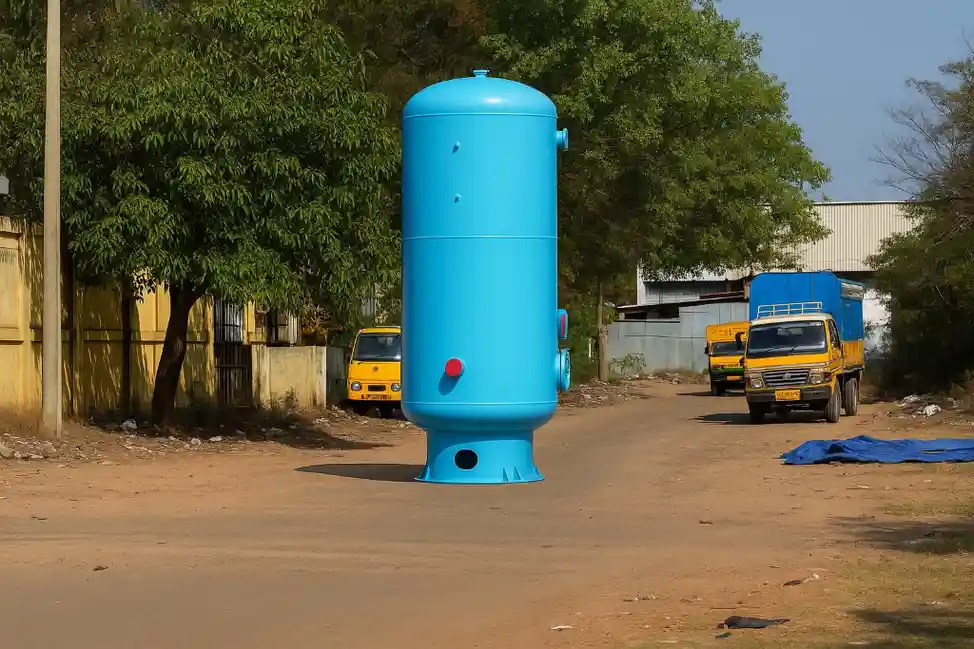
Stores a reserve of clean instrument air so valves and actuators keep responding when demand spikes.
- Used for: pneumatic control valves, actuators, emergency shutdown systems
Air Dryers
Pressure vessels, separators and storage equipment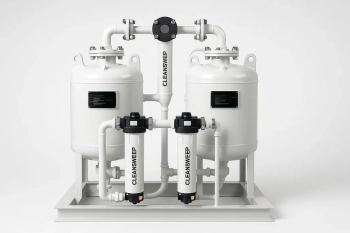
Remove moisture from compressed air to protect sensitive instruments and valve actuators from corrosion and freezing.
- Used for: dry instrument air for chemical instrumentation
O2 Reactor and Blow Tank
Pressure vessels, separators and storage equipment
Purpose-built vessels for oxidation reactions and blowdown, where reaction conditions need tight control.
- Used for: chemical oxidation processes, pulp and chemical bleaching lines
Utility, machine and overhead cooling systems
Cooling and condensing support for the rotating equipment and overhead systems that keep a plant running.
Air Cooled Heat Exchanger / Air Fin Cooler / Fin Fan Cooler
Utility, machine and overhead cooling systems
Fans drive ambient air across finned tubes, cooling or condensing process vapours without cooling water.
- Used for: sites with limited water, overhead vapour condensing
Surface Condenser / Steam Condenser / Dump Condenser
Utility, machine and overhead cooling systems
Condense exhaust steam from turbine drivers under vacuum; dump condensers absorb surplus steam during upsets.
- Used for: steam turbines driving process pumps and synthesis gas compressors
Intercooler / After Cooler / Compressor Cooler
Utility, machine and overhead cooling systems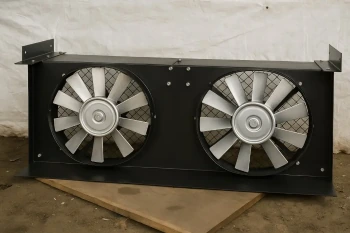
Remove compression heat between stages and after the last one, protecting efficiency and downstream equipment.
- Used for: multi-stage cooling for high-pressure process gas compressors
Hydraulic Oil Cooler / Transformer Oil Cooler / Air Blast Oil Cooler
Utility, machine and overhead cooling systems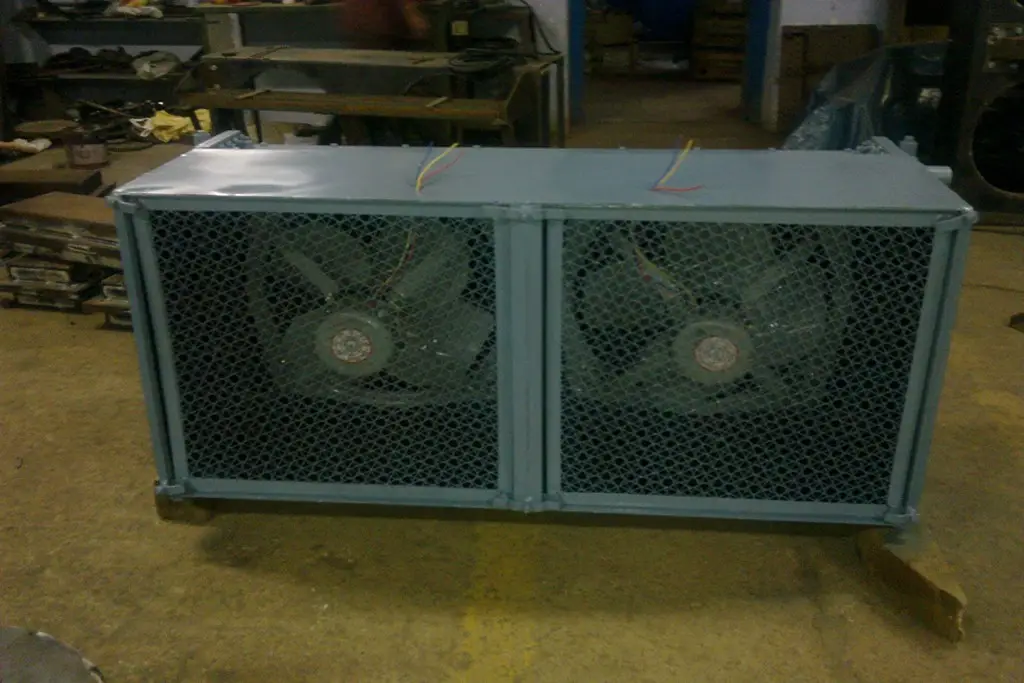
Compact finned coolers that keep lubricating, hydraulic and insulating oil inside safe temperature limits.
- Used for: agitators, compressors, extruders, heavy rotating machinery
Metallurgy mapping for chemical compatibility
Acids, chlorides, alkalis and organic solvents attack metals differently, so choosing the right alloy decides how long an exchanger lasts.
| Material / Product Line | Chemical Environment & Media Suitability |
|---|---|
| Titanium Heat Exchanger | High-chlorine media, seawater cooling, wet chlorine gas, organic acids and bleach solutions. |
| Hastelloy Heat Exchanger | Concentrated sulphuric acid, hydrochloric acid, phosphoric acid and aggressive organic synthesis solutions. |
| Duplex Stainless Steel Exchanger | Chloride-bearing process streams, stress-corrosion-cracking environments and sour gas applications. |
| Stainless Steel Heat Exchanger (316L / 317L) | Nitric acid, organic chemicals, fatty acids, amine sweetening units and general solvent handling. |
| Copper & Brass Heat Exchangers | Non-corrosive utility water cooling, instrument air conditioning and closed-loop refrigeration. |
| Aluminium Heat Exchangers | Cryogenic air separation units (ASU), hydrocarbon dew-point control and clean gas processing. |
Application Summary by Sub-Sector
| Sub-Sector | Typical UHE equipment | Process need it serves |
|---|---|---|
| Petrochemical refining and cracking | Kettle reboilers, fired heater air preheaters, duplex and Hastelloy process condensers | Distillation, furnace efficiency, corrosive overhead condensing |
| Fine and polymer chemicals | Dynamic scraped surface exchangers, spiral heat exchangers, reactor type heat exchangers | Viscous polymers, high-fouling slurries, controlled reaction temperature |
| Chemical utilities and environmental | Scrubbing towers, steam surface condensers, filter and pressure vessels | Vent gas treatment, turbine exhaust condensing, filtration and containment |
Selection Tip: Start with the chemistry (acid, chloride, solvent, solids content), choose the alloy next, then settle the exchanger geometry. A material that is wrong for the medium will shorten service life far more than a less-than-ideal layout.
Get a Free Heat Exchanger Quote
Share your fluids, flow rates, pressures, temperatures and design code with us. Our team will propose the right configuration and material for your chemical or petrochemical application.
Request My Free Quote →Frequently Asked Questions
Which heat exchanger suits sticky, viscous or fouling chemical streams?
A spiral heat exchanger resists blockage through its single self-cleaning channel, and a dynamic scraped surface unit handles resins, crystallising solutions and heat-sensitive organics that would foul a standard surface.
Which material should I choose for strong acids and chlorides?
Hastelloy suits concentrated sulphuric, hydrochloric and phosphoric acids, while titanium is preferred for high-chlorine media, wet chlorine gas and bleach solutions. Duplex stainless steel covers chloride-bearing streams with stress corrosion cracking risk.
How can waste heat be recovered in a chemical plant?
Heat recovery reboilers and regenerative exchangers preheat incoming feed with hot process streams, and air preheaters capture flue gas heat for combustion air in furnaces and boilers.
What can I use for high-temperature heating without high-pressure steam?
A thermal oil heater gives indirect heating above 300 °C at much lower operating pressure than steam would need at that temperature.
Author: Senthil Kumar, Technical Director — United Heat Exchangers Pvt. Ltd. | Last Updated: October 2026