Author: Senthil Kumar, Technical Director | Updated: June 2026
Table of Contents
- What Is an Air Preheater?
- How an Air Preheater Works
- Types of Air Preheaters
- Air Preheater Anatomy — Tubular Type
- The Cold End Corrosion Problem
- Engineering Advantages and Efficiency Benefits
- Design Specifications
- Material Selection
- Industries and Applications
- How to Select an Air Preheater
- Why United Heat Exchangers
- Delivery and What's Included
- Frequently Asked Questions
What Is an Air Preheater?
An air preheater (APH) is a high-efficiency heat exchanger used in industrial boilers, furnaces, thermal oil heaters, kilns, and other combustion systems to recover waste heat from hot flue gases and transfer it to incoming combustion air before it reaches the burner. By utilizing heat that would otherwise be lost through the chimney, an air preheater significantly improves thermal efficiency, reduces fuel consumption, lowers operating costs, and minimizes greenhouse gas emissions.
In a typical combustion system, flue gases leave the economiser or furnace at temperatures ranging from 250°C to 450°C. Without an air preheater, this valuable thermal energy is discharged into the atmosphere as waste heat. An air preheater captures this residual energy and uses it to preheat fresh combustion air, enabling the burner to achieve the required flame temperature while consuming less fuel.
Preheating combustion air is one of the most effective methods for improving boiler and furnace efficiency. As a general engineering guideline, every 20–25°C increase in combustion air temperature can reduce fuel consumption by approximately 1%. For industrial boilers and furnaces operating on natural gas, furnace oil, coal, diesel, or biomass, preheating combustion air from ambient temperature to 200–300°C can deliver fuel savings of 8–10%, making an air preheater one of the fastest-return investments in waste heat recovery.
How an Air Preheater Works
The operating principle of an air preheater is straightforward recuperative heat exchange between two gas streams at significantly different temperatures — hot flue gas on one side and cold combustion air on the other. The two streams are separated by a heat transfer surface — tubes, plates, or a regenerative matrix — through which heat flows from the hotter flue gas to the cooler combustion air by conduction and convection.
Hot Flue Gas Enters APH
Flue gas at 250–450°C from the boiler economiser or furnace exit enters the air preheater gas inlet duct.
Heat Transfers to Cold Air
Flue gas gives up heat through the tube wall or plate to the cold combustion air stream flowing counter-currently or cross-currently on the other side.
Cooled Flue Gas Exits to Stack
Flue gas leaves the APH at 120–200°C — significantly cooler and carrying far less wasted heat than an unrecovered stack discharge.
Preheated Air Enters Burner
Combustion air exits the APH at 150–300°C and enters the burner or furnace combustion chamber — reducing the fuel required to reach the design flame temperature.
Engineering Insight — Why Preheated Air Saves Fuel: In any combustion process, a portion of the fuel's heating value goes toward heating the combustion air from its inlet temperature to the flame temperature — this is parasitic energy that contributes nothing to the useful heat delivered to the process or the steam. If the combustion air enters the burner already preheated to 200°C instead of 30°C, that 170°C of sensible heat has already been supplied by the flue gas — at no additional fuel cost. The burner therefore needs to burn less fuel to reach the same flame temperature and deliver the same useful heat output. The higher the preheat temperature and the higher the volume of combustion air, the greater the fuel saving per unit of heat recovered in the air preheater.
Types of Air Preheaters
Tubular Air Preheater (Recuperative)
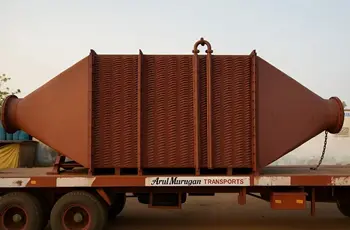
Fixed — flue gas inside or outside tubes — most common industrial typeA tubular air preheater is a recuperative, non-moving heat exchanger in which flue gas flows through the inside of vertical or horizontal tubes while combustion air flows across the outside of the tube bundle — or vice versa depending on the design. The tube bundle is enclosed in a rectangular or circular casing with separate gas and air inlet/outlet duct connections. It is the most widely used air preheater type in industrial boilers, process heaters, and furnaces because of its robust, simple construction, low maintenance, and compatibility with a wide range of fuel types and flue gas compositions.
- Flue gas inside tubes (most common) — air flows across the tube bundle exterior in cross-flow or counter-flow arrangement
- Vertical tube arrangement preferred — allows flue gas condensate to drain from the tube bottom rather than pooling inside tubes
- Multi-pass air flow — air passes across the tube bundle two or more times to improve temperature effectiveness and reduce casing cross-section
- Tube materials: carbon steel for hot end; cast iron or Corten steel for cold end below acid dew point
- IBR approval for all boiler-connected tubular air preheaters in India
- Applications: all industrial and utility boilers, process heaters, thermal oil heaters
Rotary Regenerative Air Preheater (Ljungström Type)
Slowly rotating matrix — alternately absorbs and releases heat — large power boilersA rotary regenerative air preheater uses a slowly rotating cylindrical rotor packed with corrugated or undulated heat transfer elements. The rotor turns at 1–3 rpm, alternately exposing each sector of the element pack to the hot flue gas stream (where it absorbs heat) and then to the cold combustion air stream (where it releases that stored heat). This continuous thermal cycling makes regenerative air preheaters extremely compact relative to their heat transfer capacity — a rotor just a few metres in diameter can handle the full flue gas and combustion air flow of a large power boiler unit.
- Very compact — high heat transfer surface area density from corrugated sheet elements
- Low flue gas exit temperature achievable — close temperature approach between gas and air
- Air leakage from the higher-pressure air side to the flue gas side — inherent in the rotating seal design
- Standard for large power station boilers above 100 MW
- Hot and cold end elements specified with different materials for temperature and corrosion resistance
Plate Type Air Preheater
Flat or corrugated plates — compact, low pressure dropA plate type air preheater uses flat or corrugated metal plates stacked alternately to form separate channels for flue gas and combustion air. The two streams flow through adjacent plate channels in counter-flow or cross-flow arrangement, transferring heat through the thin dividing plates. Plate air preheaters offer very low pressure drop on both the gas and air sides — important for natural draft combustion systems where the available stack draft is limited.
- Very low pressure drop — ideal for natural draft combustion systems
- Compact rectangular geometry — easy to fit into existing duct layouts
- Corrugated plates improve heat transfer coefficient by promoting turbulence in both channels
- Stainless steel or Corten steel plates for sulphurous flue gas service
- Applications: small to medium industrial boilers, drying ovens, gas turbine combustion air preheating
Cast Iron Air Preheater
Acid-resistant — high-sulphur fuel — coal and furnace oil fired boilersA cast iron air preheater uses individual cast iron element sections with internal air flow passages and flue gas flow over the external fins — assembled into a complete air preheater unit from standardised cast iron modules. Cast iron is specified specifically for its resistance to sulphuric acid condensation at the cold end of air preheaters burning high-sulphur fuels. Its corrosion resistance at below-dew-point cold face temperatures makes it the standard material for the cold end of air preheaters on coal-fired and furnace oil-fired boilers in India.
- Cast iron resists sulphuric acid condensation at cold end far better than carbon steel
- Modular element construction — individual sections replaced without full unit replacement
- Standard for high-sulphur fuel service: coal, furnace oil, petroleum coke
- Heavier than tubular steel APH but dramatically longer cold end service life in sulphur service
- Available with finned external surface for improved air-side heat transfer
Air Preheater Anatomy — Tubular Type

The Cold End Corrosion Problem
The most critical engineering challenge in air preheater design for boilers burning sulphur-containing fuels — furnace oil, coal, diesel, and petroleum coke — is cold end corrosion. The flue gas from any sulphur-bearing fuel contains sulphur trioxide (SO₃) formed in the combustion zone, which combines with water vapour in the flue gas to form sulphuric acid vapour (H₂SO₄). When any heat transfer surface in the flue gas path falls below the acid dew point temperature — at which H₂SO₄ vapour condenses to liquid — the resulting sulphuric acid attacks the metal surface, causing rapid and progressive corrosion that can destroy a steel tube air preheater cold end within 12–18 months of operation.
Engineering Insight — Acid Dew Point vs Water Dew Point: The acid dew point — at which sulphuric acid vapour condenses — is significantly higher than the water dew point — at which water vapour alone would condense. For typical furnace oil combustion with 3% sulphur content, the acid dew point of the flue gas is approximately 135–150°C, while the water dew point is only 50–55°C. This means that the cold end of an air preheater burning furnace oil must be designed to keep all metal surfaces above approximately 145–160°C (the acid dew point plus a 10–15°C safety margin) to avoid sulphuric acid condensation — even when the combustion air entering the cold end is at only 30–40°C ambient temperature. The temperature difference between the cold air and the minimum allowable metal surface temperature is managed by careful tube spacing, air flow distribution, and cold end material selection.
| Fuel Type | Typical Sulphur Content | Approximate Acid Dew Point | Recommended Cold End Material |
|---|---|---|---|
| Natural Gas | Essentially zero | 50–55°C (water dew point only) | Carbon steel — no acid corrosion risk |
| LPG / Propane | Trace | 55–65°C | Carbon steel — minimal cold end corrosion risk |
| Diesel / Light Fuel Oil | 0.05–0.5% | 100–130°C | Carbon steel with careful cold end design; Corten for high-sulphur diesel |
| Furnace Oil (FO/LSHS) | 1–4% | 130–155°C | Cast iron or Corten steel for cold end; carbon steel for hot end |
| Coal | 0.3–2% | 110–145°C | Cast iron or Corten steel cold end; carbon steel hot end |
| Petroleum Coke | 3–7% | 145–165°C | Cast iron cold end mandatory; consider Alloy 20 or glass-lined elements for very high sulphur |
Engineering Advantages and Efficiency Benefits
Direct Fuel Cost Reduction
Every 20–25°C of combustion air preheat saves approximately 1% of fuel consumption. Preheating from 30°C to 250°C saves 8–10% — a major operating cost reduction that compounds over 20–30 years of boiler or furnace service life, generating a very attractive return on the air preheater capital investment.
Reduced Stack Gas Temperature
By extracting heat from the flue gas, the air preheater reduces the stack exit temperature — directly reducing the heat wasted up the stack and improving the overall thermal efficiency of the boiler or furnace. Stack temperatures are reduced from 300–400°C (without APH) to 130–200°C (with APH), recovering a substantial fraction of the flue gas enthalpy.
Lower CO₂ Emissions per Unit of Output
Because the air preheater reduces the quantity of fuel burned per unit of steam produced or product heated, it directly reduces the CO₂ and other combustion gas emissions per unit of useful output — contributing to carbon footprint reduction targets without any change in the primary combustion process.
Improved Combustion Stability
Preheated combustion air ignites more readily and supports a more stable flame at lower fuel input — reducing the risk of flame-out during load transients and allowing the combustion system to operate efficiently at lower firing rates without instability.
Enables Higher Combustion Temperatures
In furnace applications — glass melting, ceramic firing, steel reheating — preheated combustion air allows the furnace to reach higher peak temperatures for the same fuel input, or to maintain the same production temperature with less fuel. This is particularly valuable in high-temperature furnaces where fuel cost is the dominant production cost.
Short Payback Period
The capital cost of an industrial air preheater is typically recovered in 12–24 months through fuel savings alone, making it one of the fastest-payback heat recovery investments available to industrial boiler and furnace operators. The payback period shortens as fuel prices rise.
Design Specifications
Air Preheater — Standard Design Parameters (United Heat Exchangers)
Material Selection
The dominant material selection driver in air preheater design is the fuel sulphur content and the resulting acid dew point — which sets the minimum allowable cold end metal temperature. The air preheater is typically divided into a hot end section and a cold end section, with different materials selected for each zone.
| Zone | Material | Service Condition |
|---|---|---|
| Hot End Tubes | SA-178 or SA-179 seamless carbon steel | Gas temperatures 250–450°C — above acid dew point — carbon steel fully adequate |
| Cold End Tubes — Low Sulphur Fuel | Carbon steel | Natural gas, LPG, and low-sulphur fuel service — acid dew point near water dew point, no significant corrosion risk |
| Cold End Tubes — High Sulphur Fuel | Cast iron (grey or ductile) or Corten A/B (weathering steel) | Furnace oil, coal, petcoke — acid dew point 130–165°C — cast iron resists H₂SO₄ condensation; Corten forms protective rust layer |
| Casing and Frame | Carbon steel plate IS 2062 / SA-36 | Non-pressure-bearing structural duty — external surfaces protected with heat-resistant paint |
| Expansion Joints | Stainless steel or metallic bellows | Accommodate thermal expansion between APH casing and boiler/furnace flue gas duct connections |
Industries and Applications
| Application | Fuel | APH Type | Air Preheat Temperature |
|---|---|---|---|
| Industrial Boiler | Natural gas, furnace oil, coal | Tubular or cast iron element | 150–220°C — 8–10% fuel saving |
| Power Station Boiler | Coal, gas, oil | Rotary regenerative (Ljungström type) | 250–320°C — significant efficiency gain on large units |
| Steel Reheating Furnace | Natural gas, coke oven gas | Recuperative tubular or metallic recuperator | 300–500°C — 15–25% fuel saving at high preheat |
| Glass Melting Furnace | Natural gas, furnace oil | Regenerative (checker-brick) or tubular recuperator | 400–600°C — furnace preheat critical for achieving melting temperature |
| Cement Kiln | Coal, petcoke, waste fuel | Tubular or cast iron — acid-resistant cold end | 200–300°C — energy recovery from hot kiln exit gas |
| Thermal Oil Heater | Natural gas, diesel | Plate or tubular air preheater | 150–200°C — reduces fuel consumption of thermal oil heating system |
How to Select an Air Preheater
Define Flue Gas Flow and Temperature
Provide flue gas mass or volumetric flow rate, flue gas composition (especially SO₂ / SO₃ content for acid dew point calculation), and flue gas inlet temperature from the economiser or furnace exit. These are the primary thermal sizing inputs.
Set Minimum Flue Gas Exit Temperature
Calculate or confirm the acid dew point of the flue gas based on fuel sulphur content. Set the minimum flue gas exit temperature from the APH at least 10–15°C above the acid dew point — this is the most important constraint in the thermal design for sulphur-bearing fuels.
Specify Required Air Preheat Temperature
Define the required preheated air outlet temperature — set by the burner and combustion system design requirements. Higher air preheat temperatures give greater fuel savings but also increase the thermal stress on cold end materials if the flue gas is cooled too far.
Confirm Available Draft and Pressure Drop Budget
Air preheaters add pressure drop on both the gas and air sides. Confirm the available induced draft (ID) fan head for gas-side pressure drop and the forced draft (FD) fan head for air-side pressure drop — the APH must be sized to stay within these limits to avoid reducing boiler or furnace throughput.
Select Cold End Material
Based on the fuel sulphur content and the calculated acid dew point, specify the cold end tube material — carbon steel for clean fuels, Corten A/B for medium sulphur, cast iron for high-sulphur fuel oil and coal. This single decision has the largest impact on air preheater service life and maintenance cost.
Confirm IBR Requirements
For all air preheaters connected to IBR-registered boilers in India, confirm the IBR drawing approval and certification requirement. United Heat Exchangers prepares and submits IBR documentation on behalf of clients for all boiler-connected air preheater orders.
Why United Heat Exchangers
All Air Preheater Types
Tubular carbon steel, cast iron element, Corten steel cold end, and plate type air preheaters — for all fuels, flue gas conditions, and boiler types from small package boilers to large industrial steam generators.
IBR Approved for Boiler Service
All air preheaters for IBR-registered boilers are designed, drawn, and submitted for IBR approval — with IBR certificates and test records issued before despatch. Full IBR documentation management handled in-house.
Acid Dew Point Engineering
We calculate the acid dew point for your specific fuel and flue gas composition before selecting cold end materials — preventing the most common and costly air preheater failure mode in sulphur-bearing fuel service.
Thermal Design and Efficiency Guarantee
Every air preheater is thermally sized to achieve the specified flue gas exit temperature and air preheat temperature at the design flue gas flow and composition — with a thermal performance guarantee supported by the design calculation.
Replacement and Retrofit Expertise
Replacement air preheaters for existing boilers and furnaces are designed to match existing casing dimensions and duct connection flanges — minimising installation time and piping modification during scheduled maintenance shutdowns.
35+ Years Manufacturing Experience
Decades of air preheater and waste heat recovery equipment manufacturing for boiler manufacturers, power plants, and industrial furnace operators across India and export markets — with references available for all major air preheater types and fuel applications.
Get a Free Air Preheater Quote in 48 Hours
Share your fuel type, flue gas flow rate and temperature, required air preheat temperature, available pressure drop (gas side and air side), and boiler/furnace type. Our team will complete the thermal sizing, acid dew point analysis, and material recommendation, and deliver a full technical and commercial proposal within 48 hours.
Request My Free Quote →Delivery and What's Included
What's Included with Every Air Preheater Order
- Thermal design calculation — flue gas outlet temperature and air preheat outlet temperature at rated flue gas flow; gas-side and air-side pressure drop; acid dew point analysis for the specified fuel
- Cold end material recommendation — written engineering recommendation of cold end tube material based on fuel sulphur content, dew point calculation, and expected cold end metal temperature
- IBR approval documentation — IBR drawings, calculations, and certification for all boiler-connected air preheaters in India
- Material certifications (MTRs) — traceable mill test reports for all tubes, casing plate, and structural components
- Hydrostatic test certificate — where pressure parts are present, tested at 1.5× design pressure before despatch
- Certified general arrangement drawing — overall dimensions, duct connection flanges, tube sheet details, inspection door locations, expansion joint positions
- Installation notes and maintenance guide — initial commissioning check, soot blower provision advice, cold end cleaning frequency recommendation, and tube replacement procedure
Frequently Asked Questions — Air Preheaters
What is an air preheater?
An air preheater (APH) is a heat exchanger that recovers waste heat from hot flue gas leaving a boiler, furnace, or combustion system and transfers it to the incoming cold combustion air before it enters the burner or combustion chamber. By delivering preheated air to the combustion zone, the air preheater reduces the quantity of fuel needed to reach the required flame temperature, directly improving combustion efficiency and reducing fuel consumption. Every 20–25°C rise in combustion air temperature from the air preheater reduces fuel consumption by approximately 1%.
What is the difference between a recuperative and a regenerative air preheater?
A recuperative air preheater is a fixed, non-moving heat exchanger — typically a tubular or plate type unit — where hot flue gas and cold combustion air flow simultaneously on opposite sides of a stationary heat transfer surface. Heat passes continuously from gas to air through the dividing wall. A regenerative air preheater — such as the Ljungström type — uses a slowly rotating matrix of heat storage elements that alternately pick up heat from the flue gas stream and release it to the combustion air stream as the rotor turns. Regenerative designs are more compact and achieve higher temperature effectiveness, but have air leakage between the two streams due to the rotating seal — which recuperative designs avoid entirely.
What is cold end corrosion in an air preheater?
Cold end corrosion occurs in air preheaters burning sulphur-containing fuels when any tube or heat transfer surface in the cold section of the unit falls below the acid dew point — the temperature at which sulphuric acid vapour (formed from fuel sulphur during combustion) condenses as a corrosive liquid on the surface. This condensed sulphuric acid attacks carbon steel at rates that can destroy the cold end tubes within 12–18 months. It is prevented by maintaining cold end metal temperatures above the acid dew point through careful thermal design and by using acid-resistant materials — cast iron or Corten steel — for the cold end section when burning high-sulphur fuels such as furnace oil, coal, or petroleum coke.
How much fuel can an air preheater save?
The fuel saving from an air preheater depends on the temperature rise achieved in the combustion air. As a practical rule, every 20–25°C rise in combustion air preheat temperature reduces fuel consumption by approximately 1%. For a typical industrial boiler preheating combustion air from 30°C ambient to 220°C, the air temperature rise of 190°C corresponds to approximately 8–9% fuel saving. For higher-temperature furnace applications with air preheat to 300–400°C, fuel savings of 12–18% are achievable — representing a very large absolute saving in annual fuel cost that typically repays the air preheater capital cost within 12–24 months.
Does an air preheater require IBR approval in India?
Yes — all air preheaters connected to IBR-registered boilers in India must be designed and approved under the Indian Boiler Regulations (IBR), 1950 as amended. The IBR drawing approval process requires submission of the air preheater design drawings and calculations to the Chief Inspector of Boilers in the relevant state before the unit can be installed on a registered boiler. United Heat Exchangers prepares and manages the complete IBR submission on behalf of clients as a standard part of every boiler-connected air preheater order.
Author: Senthil Kumar, Technical Director — United Heat Exchangers Pvt. Ltd. | Last Updated: June 2026