SS High Pressure Heat Exchanger
Request a Quote
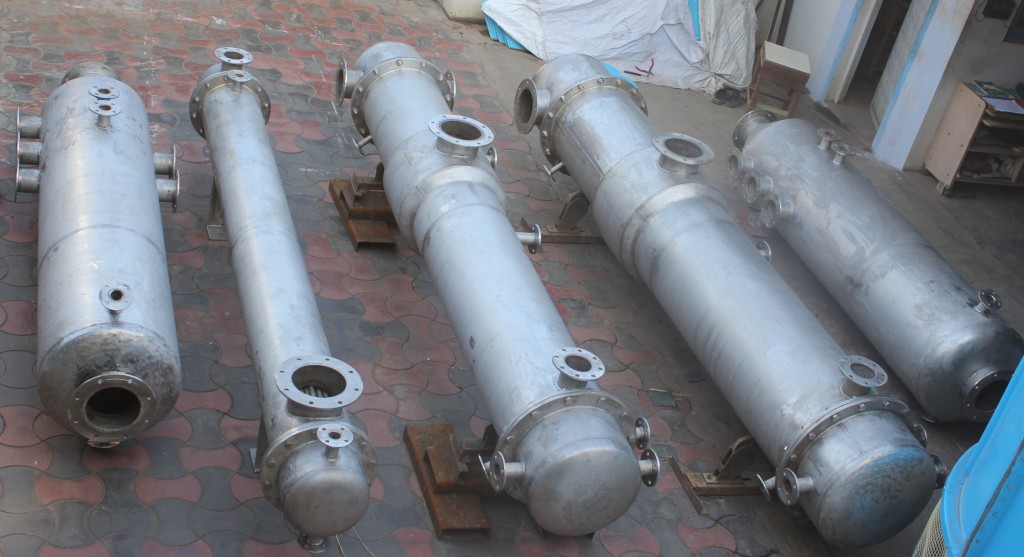
A specific thermal device called an SS High Pressure Heat Exchanger is made to effectively transfer heat between two or more fluids under extremely high pressure.
High-grade stainless steel materials like SS304, SS316, or SS316L are used in the construction of these heat exchangers because they offer remarkable resistance to mechanical stress, high temperatures, and corrosion.
Importance in SS High Pressure Heat Exchangers:
Importance in SS High Pressure Heat Exchangers:
Importance in SS High Pressure Heat Exchangers:
At United Heat Exchangers, we specialize in designing and manufacturing high-performance SS High Pressure Heat Exchangers tailored to meet industrial demands. Our expertise, commitment to quality, and innovative engineering ensure durability, maximum efficiency, and long-term cost savings.
Trust United Heat Exchangers for reliable, high-quality heat transfer solutions.
High-grade stainless steel materials like SS304, SS316, or SS316L are used in the construction of these heat exchangers because they offer remarkable resistance to mechanical stress, high temperatures, and corrosion.
Understanding Heat Exchangers
A heat exchanger is an essential component in a wide variety of industrial processes. Its primary function is to facilitate the transmission of heat from one medium to another without causing the mediums to mixture. There is a subclass of these devices known as high-pressure heat exchangers. These heat exchangers are constructed to endure situations of heightened pressure, which guarantees both operational safety and operation efficiency.The Importance of SS in High-Pressure Heat Exchangers
Stainless steel is chosen as the primary material for high-pressure heat exchangers due to its numerous advantages:- Corrosion Resistance – Stainless steel prevents rusting and degradation, making it ideal for applications involving harsh chemicals or high moisture levels.
- Strength and Durability – The material's high tensile strength ensures longevity and resistance to high-pressure conditions.
- Thermal Efficiency – Stainless steel has excellent heat conduction properties, allowing efficient thermal energy transfer.
- Hygienic Properties – In industries such as pharmaceuticals and food processing, stainless steel is preferred due to its non-reactive nature.
Working Principle of an SS High Pressure Heat Exchanger
The fundamental principles of thermodynamics and heat transfer are the foundation upon which the operation of a stainless steel high pressure heat exchanger is developed. In its most basic form, it is made up of a network of tubes, plates, or coils that allow hot and cold fluids to go along distinct channels without coming into direct touch with one another. Both conduction and convection are responsible for the transport of heat, which allows for an effective exchange of energy between the fluids.Types of Heat Transfer Methods:
- Conduction – Direct heat transfer through the solid walls of the exchanger.
- Convection – Heat is transferred due to the movement of fluids inside the exchanger.
- Radiation – In rare cases, radiation plays a role in heat transfer, especially in high-temperature applications.
1.Conduction
How It Works: In ss high pressure heat exchangers, conduction is the key process where heat moves through the solid ss components such as plates, tubes, or shells. The molecular vibrations in the heated area of the stainless steel transfer energy to cooler sections, ensuring that heat moves across the barrier without the fluids mixing.Importance in SS High Pressure Heat Exchangers:
- Material Efficiency: Stainless steel is chosen not only for its corrosion resistance but also for its adequate thermal conductivity, which is crucial for transferring heat effectively under high pressure.
- Structural Integrity: The solid metal walls must be robust to withstand high pressure while efficiently conducting heat from the hot fluid to the cold fluid.
- Design Optimization: Engineers optimize the thickness and surface area of the stainless steel components to maximize conductive heat transfer without compromising on strength.
2.Convection
How It Works: Convection in SS High Pressure Heat Exchangers occurs as the fluids on either side of the stainless steel barrier circulate and transfer heat. This process can be natural, driven by buoyancy forces when hotter fluid rises and cooler fluid descends, or forced, where pumps and fans actively move the fluids through the exchanger.Importance in SS High Pressure Heat Exchangers:
- Enhanced Heat Transfer: In high pressure systems, forced convection is typically employed. Pumped fluids create turbulence, which significantly increases the rate of heat transfer from the stainless steel surfaces to the moving fluid.
- Fluid Dynamics: The exchanger’s design ensures that fluid flow is optimized minimizing dead zones and ensuring a uniform temperature distribution across the heat transfer surface.
- Pressure Considerations: Even under high pressure, the design maintains efficient convective heat transfer while ensuring that the fluid dynamics do not compromise the exchanger's structural integrity.
3.Radiation
How It Works: Radiation transfers heat by electromagnetic waves, mostly in the infrared band. Every surface emits radiation based on its temperature, and this method does not require a physical medium to transfer heat.Importance in SS High Pressure Heat Exchangers:
- Supplementary Role: Although conduction and convection are the primary mechanisms in these exchangers, radiation can contribute, especially in environments where temperatures are extremely high.
- High-Temperature Applications: At elevated temperatures, the stainless steel surfaces may emit significant radiant energy, which can aid in overall heat transfer. However, this effect is usually secondary to conduction and convection in most SS high pressure heat exchanger designs.
- Surface Emissivity: The efficiency of radiative heat transfer can be influenced by the emissivity of the stainless steel surfaces. In some designs, surface treatments may be applied to optimize this property.
Design and Construction of SS High Pressure Heat Exchangers
Components of an SS High Pressure Heat Exchanger:
- Tubes or Plates – The primary medium through which heat transfer occurs.
- Shell – Encases the exchanger, providing structural support and containment.
- End Caps and Nozzles – Enable the inflow and outflow of fluids under pressure.
- Baffles – Used to direct fluid flow, increasing efficiency.
- Gaskets and Seals – Ensure leak-proof operation at high pressure.
Common Design Types:
- Shell and Tube Heat Exchanger – Composed of multiple tubes enclosed in a cylindrical shell, suitable for high-pressure applications.
- Plate Heat Exchanger – Features stacked plates to maximize heat transfer area while withstanding high pressure.
- Coil Heat Exchanger – Uses coiled tubing for efficient thermal exchange in compact spaces.
- Fin-Tube Heat Exchanger – Integrates fins to increase the heat transfer surface area for improved efficiency.
Advantages of SS High Pressure Heat Exchangers
- Superior Corrosion Resistance: The inherent properties of stainless steel protect against rust and chemical degradation, ensuring longevity even when handling corrosive fluids and operating in harsh environments.
- High Pressure and Temperature Endurance: Designed to withstand extreme conditions, these heat exchangers maintain structural integrity and reliable performance even under elevated pressures and temperatures, critical for applications in power generation and petrochemical processing.
- Enhanced Thermal Efficiency: Optimized designs maximize the heat transfer surface area, ensuring efficient conduction and convection. This results in better thermal performance and energy savings by effectively managing heat flow between fluids.
- Low Maintenance Requirements: The robust construction and high-quality materials reduce the frequency of maintenance interventions. Routine inspections and minimal upkeep help lower operational downtime and overall costs.
- Versatility Across Industries: Their durability and high performance make them suitable for a wide range of sectors, including oil & gas, power plants, chemical processing, pharmaceuticals, food and beverage, and marine applications.
- Cost-Effectiveness Over Time: Despite the initial investment, the reliability and extended service life of stainless steel high pressure heat exchangers contribute to long-term cost savings by reducing energy consumption and minimizing replacement and repair expenses.
Challenges and Considerations
While SS High Pressure Heat Exchangers offer numerous benefits, there are certain challenges to consider:Design Complexity and Material Selection
- Optimized Design: Engineering a unit that meets high-pressure requirements without compromising on thermal efficiency requires precise calculations and simulations.
- Material Grades: Choosing the correct stainless steel grade (such as SS304, SS316, or SS316L) is essential to balance corrosion resistance, thermal conductivity, and mechanical strength.
Corrosion and Chemical Compatibility
- Corrosive Environments: While stainless steel is resistant to corrosion, exposure to highly aggressive chemicals or fluctuating pH levels can still degrade materials over time.
- Protective Coatings: In some cases, additional coatings or surface treatments may be needed to enhance durability and prevent premature corrosion.
Thermal Efficiency vs. Structural Integrity
- Heat Transfer Optimization: Maximizing the heat transfer surface area (through plates, tubes, or fins) is critical, yet increasing surface area can sometimes conflict with the need for robust, pressure-resistant structures.
- Balancing Act: Designers must carefully balance thermal performance with the mechanical strength required to handle high pressures.
Fouling and Maintenance Challenges
- Fouling Risks: High-pressure systems are prone to fouling, scaling, or deposit buildup, which can significantly reduce thermal efficiency over time.
- Maintenance Intervals: Developing an effective maintenance schedule including regular cleaning and inspections is essential to mitigate fouling and extend the exchanger’s lifespan.
Manufacturing and Quality Control
- Precision Fabrication: The fabrication process for SS high pressure heat exchangers demands high precision to ensure that all welds, brazing, and assembly meet stringent quality standards.
- Inspection Protocols: Robust quality control and non-destructive testing methods must be in place to detect any potential defects that could lead to failure under high pressure.
Cost Considerations
- Initial Investment: The cost of high-grade stainless steel and precision manufacturing can be high.
- Long-Term Savings: Despite the upfront investment, the durability, reduced downtime, and lower maintenance costs over time often justify the expense.
Environmental and Regulatory Compliance
- Industry Standards: Adhering to strict industry and environmental standards is crucial, especially in sectors like pharmaceuticals, food processing, and marine applications.
- Safety Regulations: High-pressure systems must comply with safety regulations to prevent hazardous failures, which involves regular documentation and adherence to maintenance protocols.
Best Practices for Maintenance and Efficiency of SS High Pressure Heat Exchangers
Proper maintenance and operational best practices are essential for ensuring the longevity, efficiency, and reliability of SS High Pressure Heat Exchangers. Adhering to these practices helps prevent breakdowns, reduces downtime, and optimizes energy usage.1. Regular Inspection and Monitoring
- Conduct routine visual inspections for signs of corrosion, leakage, or mechanical damage.
- Monitor temperature and pressure differentials to detect potential blockages or efficiency loss.
- Use non-destructive testing (NDT) methods such as ultrasonic or radiographic testing to check for internal wear or cracks.
2. Preventing and Controlling Fouling
- Fouling (buildup of deposits, scaling, or biological growth) can severely impact heat exchanger efficiency.
- Use anti-fouling treatments or filters to minimize debris and contaminant accumulation.
- Implement a cleaning schedule to remove scaling, rust, or chemical deposits before they impact performance.
3. Efficient Cleaning Methods
- Chemical Cleaning: Use cleaning agents suitable for stainless steel to dissolve scale, oil residues, and other contaminants.
- Mechanical Cleaning: For severe fouling, use high-pressure water jets, brushes, or ultrasonic cleaning techniques.
- CIP (Clean-in-Place) Systems: In industries like pharmaceuticals and food processing, automated cleaning systems help maintain hygiene and efficiency.
4. Proper Fluid Management
- Ensure the correct flow rate of both hot and cold fluids to maintain optimal heat transfer.
- Avoid fluid stagnation, which can cause corrosion, deposits, and temperature imbalances.
- Use corrosion inhibitors or treatment chemicals if working with aggressive fluids.
5. Leak Detection and Prevention
- High-pressure systems require tight seals and robust gaskets to prevent leaks. Regularly check for loose fittings, worn seals, or cracked welds. Use pressure testing techniques, such as hydrostatic testing, to ensure the exchanger can withstand operational conditions.
6. Optimize Operating Conditions
- Operate within the designed pressure and temperature limits to prevent thermal stress and material fatigue.
- Avoid rapid temperature fluctuations, which can cause expansion-contraction stress, leading to cracks.
- Use automation and control systems to maintain stable operating conditions.
7. Proper Storage and Handling
- Store spare heat exchangers or components in a dry, clean, and controlled environment to prevent premature corrosion.
- When installing or relocating, handle the exchanger carefully to avoid mechanical damage to tubes, plates, or shell structures.
8. Upgrade and Retrofit When Needed
- If the heat exchanger shows reduced efficiency, consider upgrading components, such as installing more efficient plates, improved seals, or high-performance coatings.
- Retrofit with newer designs or advanced materials to improve thermal performance and reduce energy consumption.
Conclusion
An SS High Pressure Heat Exchanger is a vital component in industries requiring efficient heat transfer under extreme pressure conditions. With its superior corrosion resistance, mechanical strength, and thermal efficiency, ss remains the preferred material for such exchangers. Whether used in power plants, chemical processing, or food industries, these heat exchangers play a crucial role in optimizing energy usage and ensuring operational efficiency.At United Heat Exchangers, we specialize in designing and manufacturing high-performance SS High Pressure Heat Exchangers tailored to meet industrial demands. Our expertise, commitment to quality, and innovative engineering ensure durability, maximum efficiency, and long-term cost savings.
Trust United Heat Exchangers for reliable, high-quality heat transfer solutions.
Related Products