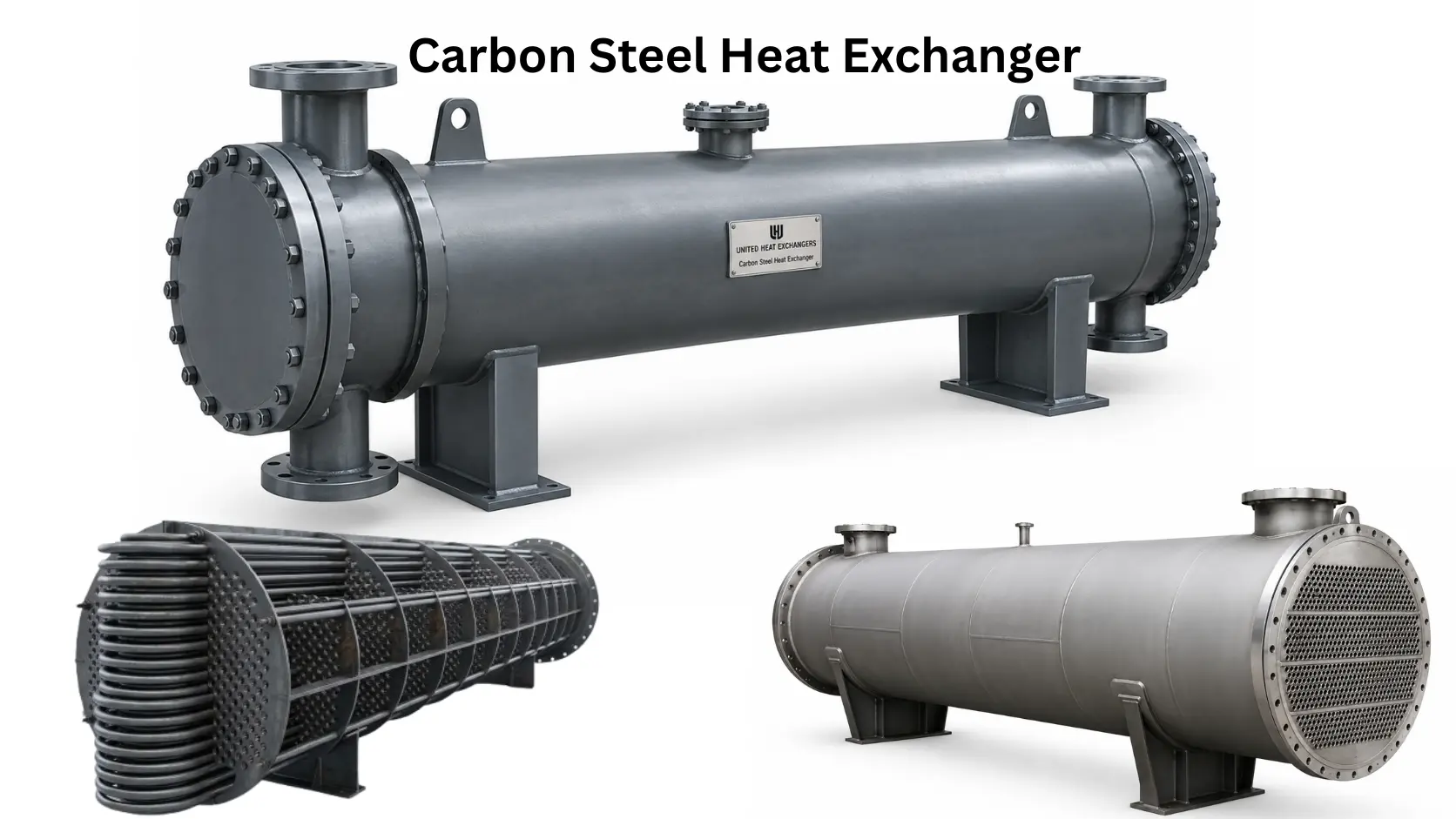
Carbon steel remains the highest-volume material in industrial heat exchanger manufacture worldwide because most process and utility streams — clean water, steam, hydrocarbons free of significant H₂S or chlorides, compressed air, and lube oil — do not require alloy-grade corrosion resistance. United Heat Exchangers designs and fabricates carbon steel shell-and-tube and air cooled heat exchangers to ASME Section VIII and TEMA for refineries, power plants, and general process industry clients across India and 30+ export markets.
SA516-70The standard pressure vessel plate grade for carbon steel shells and heads
~60–70%Typical material cost saving over 316L stainless steel for an equivalent duty
TEMA Class R/C/BFull mechanical design compliance across refinery, commercial, and process grades
30+Export countries — refinery, power, and general process markets worldwide
ASME U-StampShell and header pressure parts certified to ASME Section VIII Division 1
ASTM SA516 / SA106Plate and pipe sourced and tested to ASTM/ASME specification
TEMA CompliantMechanical design follows TEMA Class R/C/B construction rules
HTRI Xist RatedThermal performance verified by industry-standard HTRI software
48-hr QuoteThermal sizing and budgetary proposal from your process datasheet
When Carbon Steel Is the Right Material
Material selection should always start from the process and cooling-side fluid chemistry, not from habit or lowest first cost alone. Carbon steel is the correct default whenever the operating envelope stays within its proven limits.
1Check Fluid Chemistry
Confirm chloride, H₂S, CO₂, and oxygen content on both process and cooling sides are within carbon steel's known corrosion limits.
2Confirm pH Range
Carbon steel performs reliably in near-neutral pH service; strongly acidic or alkaline streams call for alloy or lined construction.
3Set Corrosion Allowance
Add 1.5–3 mm of sacrificial wall thickness so the design life is met even with a modest general corrosion rate.
4Apply Coating If Needed
Specify internal coating, painting, or cathodic protection where intermittent wetting or condensation risk exists.
5Confirm Design Life
With correct allowance and protection, carbon steel routinely delivers 15–25+ years of reliable service in its proven envelope.
Engineering Insight — The Chloride and Acidity Threshold: Carbon steel corrodes at a broadly predictable, low general rate in clean water, steam, and hydrocarbon service near neutral pH. It becomes unsuitable once the stream carries significant free chlorides, dissolved H₂S/CO₂ with condensing water (sour service), or strong acids/alkalis — at that point, the corrosion rate stops being uniform and predictable, and stainless steel, duplex, or an exotic alloy is the correct specification. Confirming this threshold before manufacture is the single most important step in a carbon steel exchanger's design.
Types of Carbon Steel Heat Exchangers
United Heat Exchangers builds carbon steel into every core exchanger configuration used across refinery, power, and general process service.
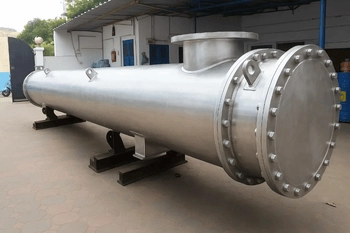
Carbon steel tubes, shell, and tubesheet cover the widest range of duties in the plant — cooling water, steam condensing, lube oil, and hydrocarbon services within the material's proven envelope.
- Fixed tubesheet, U-tube, or floating head per TEMA type
- Lowest material cost per unit of heat transfer surface
- Standard for cooling water, steam, and clean hydrocarbon services
- Fastest fabrication and shortest lead time of any material option
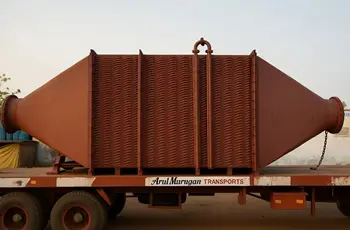
Carbon steel bare or finned tubes with aluminium fins, mounted on a carbon steel structural frame — the standard construction for API 661 fin fan coolers in non-corrosive process service.
- Structural frame, plenum, and header box all in carbon steel
- Galvanized or painted structure for atmospheric corrosion protection
- Standard for hydrocarbon and compressed gas cooling duties
- Available in forced or induced draft, per site layout
Epoxy, phenolic, or rubber-lined internals extend carbon steel's service envelope into mildly corrosive or intermittently wet duties without the cost of a solid alloy exchanger.
- Internal coating applied to waterbox, channel, and tubesheet face
- Cost-effective alternative to stainless steel for water-side protection
- Coating life and recoat interval documented in the O&M manual
- Suitable for cooling tower water and brackish makeup water duties
A carbon steel shell and structure paired with stainless, duplex, or admiralty brass tubes — protecting only the surfaces exposed to the more corrosive stream while keeping the rest of the exchanger economical.
- Lowest-cost route to protect the more corrosive circuit only
- Common where cooling water is corrosive but process side is not
- Isolation gaskets and coated fasteners prevent galvanic attack
- Widely used for cooling-water-side tube upgrades on existing designs
Key Components and Plate Grades
Component 01Carbon Steel Tubes
Seamless tubes to ASTM A179 or A192 for standard pressure duties, or A106 pipe-derived tubes for higher-temperature service — sized for the design velocity and fouling margin of the process.
Component 02Pressure Vessel Plate — SA516
ASME SA516 Grade 70 is the standard plate specification for shells, heads, and tubesheets — normalized for improved toughness where low-temperature or cyclic service is expected.
Component 03Forged Nozzles and Flanges
ASTM A105 forged carbon steel for nozzles, flanges, and other forged pressure parts, matched to the shell material and rated per ASME B16.5 flange class.
Component 04Baffles and Tie Rods
Carbon steel baffle plates direct shell-side flow across the tube bundle and support the tubes against flow-induced vibration, sized to TEMA baffle-spacing rules.
Component 05Corrosion Allowance
A specified sacrificial thickness — typically 1.5–3 mm — added to the pressure-part wall calculation so the exchanger meets its design life even accounting for expected general corrosion.
Component 06Surface Protection System
External painting to a specified coating system, and where applicable, internal lining or coating on waterbox and channel surfaces exposed to intermittent wetting or mildly corrosive fluids.
Engineering Advantages of Carbon Steel Heat Exchangers
Lowest Material Cost
Carbon steel plate and tube typically cost a fraction of stainless or exotic alloy per kilogram, giving the lowest installed cost for duties within its proven service envelope.
Fastest Fabrication and Delivery
Widely available material, simpler welding procedures, and no special heat treatment requirements give carbon steel the shortest manufacturing lead time of any material option.
Excellent Weldability
Standard carbon steel welding procedures with no special filler metal matching or interpass temperature control required — the most straightforward material to fabricate and field-repair.
High Thermal Conductivity
Carbon steel's thermal conductivity is comparable to austenitic stainless steel and well suited to standard process cooling and heating duties without special surface enhancement.
Proven, Predictable Performance
Decades of documented service history across every major process industry give carbon steel exchangers a well-understood corrosion and mechanical performance record for design confidence.
Easy Field Repair and Retubing
Replacement tubes, plates, and fittings are readily available worldwide, and field welding or retubing does not require the specialised procedures alloy materials demand.
Corrosion Allowance and Protective Coatings
Carbon steel's one significant limitation — general corrosion in the presence of moisture and oxygen — is managed through design allowance and surface protection rather than alloy substitution, keeping material cost low while meeting the required design life.
| Protection Method | Typical Application | What It Achieves |
|---|
| Corrosion Allowance | Added to calculated minimum wall thickness on all wetted pressure parts | Ensures design pressure rating is met throughout the exchanger's service life despite expected general corrosion |
| External Painting System | All external carbon steel surfaces — shell, structure, nozzles | Protects against atmospheric corrosion; system selected for the site's environmental severity |
| Internal Epoxy or Phenolic Lining | Waterbox and channel interiors exposed to cooling water or condensate | Extends service life in mildly corrosive water without the cost of alloy tubes and shell |
| Cathodic Protection (Sacrificial Anodes) | Waterboxes and channels in brackish or seawater-adjacent cooling duty | Actively suppresses corrosion rate on carbon steel surfaces in immersed service |
Specification Tip: Specify corrosion allowance, coating system, and inspection interval based on actual fluid chemistry and expected years in service — not a generic default. United Heat Exchangers reviews your process and cooling-water analysis to recommend the correct allowance and protection package before manufacture begins.
Design Standards — ASME, ASTM and TEMA
Every carbon steel heat exchanger from United Heat Exchangers is designed, inspected, and documented to the following codes.
| Standard | Scope | Key Output |
|---|
| ASME Section VIII Div. 1 | Pressure vessel design of shell, channel, and tubesheet — wall thickness, weld NDE, and hydrostatic test at 1.3× MAWP | ASME U-Stamp; Manufacturer's Data Report (Form U-1) signed by Authorised Inspector |
| ASME SA516 / ASTM A105 | Pressure vessel plate (SA516 Grade 70) and forged fittings/flanges (A105) — chemical composition, mechanical and impact properties | Mill test certificates; Charpy impact test reports where low-temperature service applies |
| ASTM A179 / A192 / A106 | Seamless carbon steel tube for heat exchangers (A179/A192) and pipe for higher-temperature service (A106) | Mill test certificates; hydrostatic or eddy-current tube test reports |
| TEMA Class R / C / B | Mechanical design rules for tube pitch, baffle spacing, tube-to-tubesheet joints, and bundle removal — Class R for refinery-severity service, Class C for commercial, Class B for chemical process | TEMA-compliant mechanical drawing set and tube layout |
| HTRI Xist / Xace Software | Rigorous thermal and hydraulic rating for shell-and-tube (Xist) or air-cooled (Xace) configurations — heat transfer, pressure drop, and fouling margin | Guaranteed thermal performance certificate |
Specification Tip: Confirm minimum design metal temperature (MDMT) early — carbon steel plate toughness at low temperature governs whether standard SA516-70 or an impact-tested, normalized plate grade is required. Share your site's winter ambient conditions along with the process datasheet.
Industries and Applications
Petroleum RefiningPower GenerationPetrochemicalGas CompressionGeneral ProcessHVAC & UtilitiesFertiliserSugar & Distillery
| Industry | Typical Duty | Process Stream | Configuration |
|---|
| Petroleum Refining | Crude preheat trains, product coolers, non-corrosive utility coolers | Clean hydrocarbon streams within carbon steel's proven envelope | Carbon steel shell-and-tube, fixed tubesheet or U-tube |
| Power Generation | Lube oil coolers, closed-loop cooling water heat exchangers, steam condensers | Treated closed-loop cooling water; turbine lube oil | Carbon steel shell-and-tube with corrosion allowance |
| Gas Compression | Instrument air coolers, general utility gas coolers | Compressed air, nitrogen, and non-sour process gas | Carbon steel air cooled or shell-and-tube exchanger |
| General Process & HVAC | Cooling tower water heat exchangers, chiller condensers, general utility cooling | Cooling tower water with treatment programme in place | Carbon steel shell with internal coating on waterbox |
| Sugar, Distillery & Fertiliser | Juice heaters, vapour condensers, ammonia and urea process coolers | Process condensate and steam within near-neutral pH range | Carbon steel shell-and-tube, standard header types |
Carbon Steel vs Stainless Steel
| Parameter | Carbon Steel | 316L Stainless Steel |
|---|
| Relative Material Cost | Lowest — typically 30–40% of an equivalent 316L design | Significantly higher per kilogram of plate and tube |
| Corrosion Resistance | Good in clean, near-neutral pH, low-chloride service with corrosion allowance | Good general and chloride resistance up to its practical pitting limit |
| Fabrication Complexity | Simple — standard procedures, no special filler metal or heat treatment | Moderate — requires matched filler metal and clean weld practice |
| Typical Design Life | 15–25+ years with correct corrosion allowance and protection | 20–30+ years within its chloride and pH service envelope |
| Best Fit | Non-corrosive to mildly corrosive process and utility duties | Moderately corrosive duties and where product purity matters |
When to Choose Carbon Steel: Carbon steel is the right choice whenever process and cooling fluids stay within near-neutral pH, low chloride, and non-sour conditions — the majority of refinery, power, and general process cooling and heating duties. Once chloride content, acidity, or sour-service H₂S/CO₂ exceed carbon steel's proven limits, stepping up to stainless, duplex, or an exotic alloy protects reliability and avoids premature failure.
Why United Heat Exchangers
Volume Fabrication Efficiency
Carbon steel is our highest-throughput material — established welding procedures, in-house plate stock, and streamlined quality control keep lead times short without compromising ASME compliance.
HTRI Thermal Guarantee
Bundle geometry, baffle spacing, and tube layout optimized in HTRI Xist or Xace. We issue a guaranteed thermal performance certificate at design conditions with every order.
ASME U-Stamp Certified
Pressure parts carry the ASME U-Stamp with full Manufacturer's Data Reports, alongside traceable SA516/A105/A179 mill certification for every carbon steel component sourced.
30+ Countries — Full In-House Engineering
From process datasheet to certified fabrication drawing — thermal design, corrosion allowance calculation, and export documentation — entirely in-house, no subcontracting. Delivered to refinery and power clients across 30+ countries.
Get a Free Carbon Steel Heat Exchanger Quote in 48 Hours
Send your process duty, fluid properties, design pressure and temperature, and site location. We return an HTRI-sized thermal proposal and a budgetary quote within 48 hours.
Request My Free Quote →
Delivery and What's Included
48 hrsHTRI sizing and budgetary proposal from your process datasheet
5–8 wksStandard carbon steel shell-and-tube exchangers, standard header types
8–12 wksLarge or complex units, ASME U-Stamp, internally coated or lined construction
On requestExpedited schedule for plant turnarounds and emergency replacements
- HTRI thermal performance guarantee — heat transfer and pressure drop at design conditions, with overdesign margin clearly documented
- ASME U-Stamp and Manufacturer's Data Report (Form U-1) — for all pressure parts, signed by Authorised Inspector; MAWP and design temperature stamped on nameplate
- SA516 / A105 / A179 mill certification — full material traceability for every plate, forging, and tube used in the exchanger
- Corrosion allowance and coating specification — documented sacrificial thickness and, where applicable, internal lining system and recoat interval
- NDE reports — RT/UT for pressure butt welds, MT/PT for fillet welds, signed by ASNT Level II inspector
- Operations and maintenance manual — tube-side and shell-side cleaning procedure, inspection intervals, and 2-year spare parts list
Frequently Asked Questions — Carbon Steel Heat Exchanger
What is a carbon steel heat exchanger used for?
A carbon steel heat exchanger uses carbon steel tubes, shell, and pressure parts for process cooling and heating duties where the fluids are non-corrosive to mildly corrosive — clean hydrocarbons, treated cooling water, steam, and compressed gases. It is the default, most cost-effective material choice across refinery, power, and general process industry.
How long does a carbon steel heat exchanger last?
With correctly specified corrosion allowance and surface protection, carbon steel exchangers routinely deliver 15–25+ years of reliable service in duties within the material's proven chemistry envelope. Service life shortens quickly outside that envelope, particularly in the presence of chlorides, sour service, or strongly acidic or alkaline streams.
What is corrosion allowance and why does it matter?
Corrosion allowance is extra wall thickness — typically 1.5–3 mm — added beyond the pressure-calculated minimum, so that after years of expected general corrosion the exchanger still meets its design pressure rating. It is the primary tool that lets carbon steel deliver a long, predictable service life at low material cost.
When should I upgrade from carbon steel to stainless steel?
Upgrade when process or cooling-side chloride content, acidity, or sour-service H₂S/CO₂ with condensing water exceeds carbon steel's proven corrosion limits — typically indicated by unexpectedly rapid wall loss, pitting, or frequent leaks in service. A cooling water and process fluid analysis will confirm whether stainless, duplex, or an exotic alloy is warranted.
Can carbon steel tubes be used with a stainless steel shell, or vice versa?
Yes — hybrid construction using carbon steel for the less critical side and an alloy for the more corrosive circuit is common and cost-effective. Isolation gaskets and correctly specified fasteners prevent galvanic corrosion at the interface between dissimilar metals.
What is the lead time for a carbon steel heat exchanger from India?
Standard carbon steel shell-and-tube exchangers with standard header types deliver in 5–8 weeks — the fastest lead time of any material option. Large or complex units, ASME U-Stamp, or internally coated/lined construction take 8–12 weeks. Expedited delivery is available for plant shutdowns and emergency replacements — contact us with your timeline.
Author: Senthil Kumar, Technical Director — United Heat Exchangers Pvt. Ltd. | Last Updated: September 2026