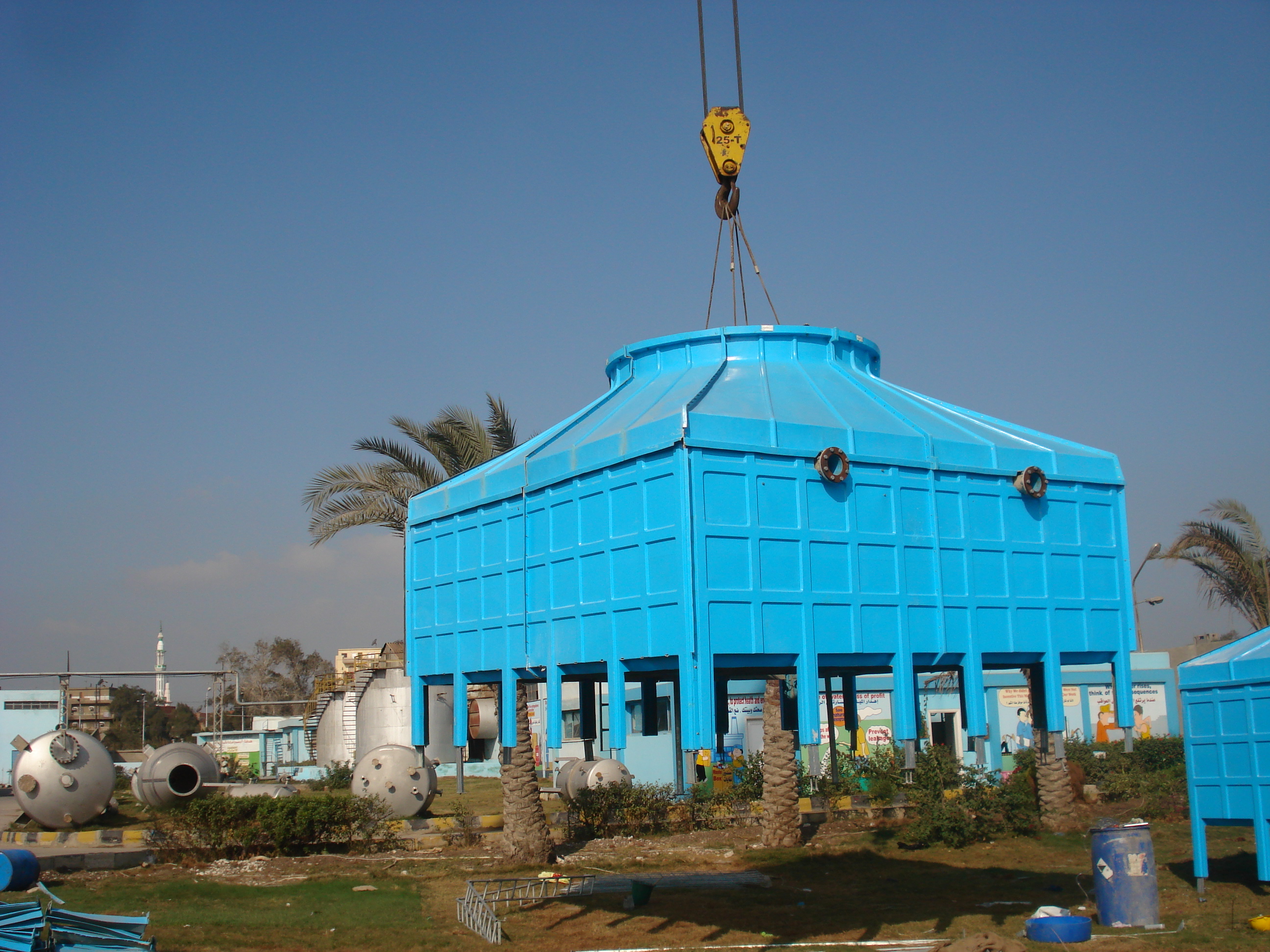
A
dry cooling tower is a heat rejection device that removes excess heat from industrial processes, power plants, or HVAC systems without using water as a cooling medium. Unlike wet cooling towers, which rely on the evaporation of water to dissipate heat, dry cooling towers operate by using ambient air to cool the working fluid (usually water or a coolant) through a network of finned tube heat exchangers.
In a dry cooling system, hot fluid from the process is circulated through a series of finned tubes, where large fans force ambient air over the tubes, effectively transferring heat from the fluid to the air. The heated air is then released into the atmosphere, while the cooled fluid is recirculated back into the system. This method makes dry cooling towers highly suitable for areas facing water scarcity, as they do not require continuous water replenishment.
How Does a Dry Cooling Tower Work?
A dry cooling tower functions by using ambient air to remove excess heat from industrial processes, power plants, or HVAC systems, without relying on water evaporation. It operates based on the principle of convective heat transfer, where heat is dissipated from the working fluid (such as water, steam, or coolant) to the surrounding air using finned tube heat exchangers and powerful fans.
Step-by-Step Working Process of a Dry Cooling Tower:
- Hot Fluid Enters the System:
The heated fluid (usually water or a coolant) from an industrial process, power plant condenser, or HVAC system is pumped into the cooling tower. - Heat Exchange in Finned Tubes:
The hot fluid flows through a network of finned tubes that are specifically designed to maximise surface area for better heat dissipation. - Air Circulation via Fans:
Large axial or centrifugal fans force ambient air over the finned tubes. As the air passes over the hot fluid inside the tubes, it absorbs heat through conduction and convection. - Heat Dissipation into Atmosphere:
The heated air is then expelled into the atmosphere, carrying away the thermal energy, while the cooled fluid inside the tubes is recirculated back into the system. - Continuous Cooling Cycle:
The process repeats continuously, ensuring a consistent and efficient cooling mechanism without the need for water evaporation.
Types of Dry Cooling Towers: A Detailed Explanation
Dry cooling towers are classified into different types based on their design and working mechanism. They primarily function by using ambient air to dissipate heat from industrial processes without the need for water evaporation. Below are the main types of dry cooling towers:
1. Air-Cooled Condenser (ACC)
Overview:
An Air-Cooled Condenser (ACC) is a type of dry cooling system commonly used in power plants and industrial applications. Instead of water, it uses air to condense steam or cool the working fluid directly.
How It Works:
- Exhaust steam from a steam turbine enters the finned tube heat exchanger.
- Large axial fans draw in ambient air and force it over the finned tubes.
- The air absorbs heat from the steam, causing it to condense into liquid (usually water).
- The condensed water is collected and pumped back into the system for reuse in the steam cycle.
Advantages:
- Eliminates water usage, making it suitable for arid regions.
- Reduces environmental impact by eliminating cooling water discharge.
- Lower risk of scaling and corrosion compared to wet cooling towers.
Applications:
- Thermal power plants
- Cogeneration plants
- Petrochemical industries
2. Indirect Dry Cooling Tower
Overview:
An indirect dry cooling tower combines the principles of both dry and wet cooling, but without direct contact between the working fluid and ambient air. Instead, a secondary closed-loop cooling system is used.
How It Works:
- Hot water or steam from the industrial process is passed through a heat exchanger.
- A secondary cooling fluid (air or water) absorbs heat from the primary fluid in the exchanger.
- The secondary cooling fluid is then cooled by large fans before being recirculated.
Advantages:
- Prevents direct exposure of the working fluid to ambient air, reducing contamination risks.
- More efficient than direct dry cooling in hot climates.
- Less thermal plume compared to wet cooling towers.
Applications:
- Power plants in regions with limited water resources
- Chemical and refinery plants
- HVAC systems for industrial buildings
3. Forced Draft Dry Cooling Tower
Overview:
A Forced Draft Dry Cooling Tower uses fans positioned at the base of the cooling tower to push ambient air upward through the heat exchanger. This design enhances air distribution and cooling efficiency.
How It Works:
Hot fluid flows through finned tubes arranged in a horizontal or vertical configuration.Fans force cool ambient air over the tubes, absorbing heat from the fluid inside.After being heated, the air is let out into the atmosphere.
Advantages:
- Provides better airflow control and cooling efficiency.
- Requires less power for fan operation compared to induced draft systems.
- Less prone to recirculating warm air, ensuring optimal cooling performance.
Applications:
- Industrial manufacturing plants
- Power generation stations
- Petrochemical processing units
4. Induced Draft Dry Cooling Tower
Overview:
An Induced Draft Dry Cooling Tower has fans located at the top of the cooling tower, which pull air through the heat exchanger and expel it upward. This design creates a more efficient cooling effect compared to forced draft systems.
How It Works:
- Hot process fluid circulates through finned tubes.
- Ambient air is drawn in from the bottom and flows over the heat exchanger.
- The fans at the top pull the heated air upwards and release it into the atmosphere.
Advantages:
- Higher cooling efficiency due to better air distribution.
- Reduces the risk of hot air recirculation.
- Less susceptible to debris accumulation compared to forced draft systems.
Applications:
- Power plants and refineries
- Large-scale HVAC systems
- Industrial cooling applications
Comparison of Dry Cooling Tower Types
| Type of Dry Cooling Tower | Airflow Direction | Fan Position | Efficiency | Suitable Applications |
|---|
| Air-Cooled Condenser (ACC) | Direct cooling | Top-mounted | High | Power plants, cogeneration plants |
| Indirect Dry Cooling Tower | Indirect cooling | Various positions | Medium to High | Industrial plants, refineries |
| Forced Draft Dry Cooling Tower | Horizontal/Vertica | Bottom-mounted | Moderate | Manufacturing plants, HVAC |
| Induced Draft Dry Cooling Tower | Vertical | Top-mounted | High | Power plants, large industrial cooling |
Key Components of a Dry Cooling Tower
- Heat Exchanger Tubes (Finned Tubes)—These are responsible for transferring heat from the process fluid to the air.
- Fans (Forced Draft or Induced Draft)—Used to draw or push air over the heat exchangers for efficient cooling.
- Air Intake System—Allows ambient air to enter and pass over the heat exchanger coils.
- Support Structure—Provides stability and ensures proper airflow.
- Exhaust System—Releases heated air after it absorbs heat from the process fluid.
Differences Between Dry and Wet Cooling Towers
| Feature | Dry Cooling Tower | Wet Cooling Tower |
|---|
| Cooling Method | Uses only air for heat dissipation | Uses water evaporation for cooling |
| Water Consumption | Zero water usage | High water usage |
| Maintenance | Low (no water treatment needed) | High (requires water treatment to prevent scaling & microbial growth) |
| Efficiency | Slightly lower than wet cooling | Higher due to evaporative cooling |
| Environmental Impact | No water wastage, eco-friendly | Potential water wastage & chemical use |
| Best Suited For | Water-scarce areas, industrial plants, power plants | Industries where water is available and cooling efficiency is a priority |
Advantages of Dry Cooling Towers
- Water Conservation
Dry cooling towers eliminate water consumption, making them suitable for areas with limited water resources. - Reduced Maintenance Costs
They do not require water treatment, preventing scaling, corrosion, and algae growth, reducing maintenance expenses. - Eco-Friendly and Sustainable
These systems reduce environmental impact by eliminating water wastage and preventing harmful chemical discharge. - Year-Round Performance
Dry cooling towers function effectively in both hot and cold climates without freezing or evaporation issues. - Energy Efficiency
With optimized airflow and no need for water pumps, they consume less energy and lower operational costs. - No Visible Plume Formation
Unlike wet cooling towers, they do not produce visible steam, reducing environmental and zoning concerns. - Space-Saving and Modular Design
They require less space and can be installed on rooftops or in compact industrial facilities. - Long Lifespan and Durability
Corrosion-resistant materials ensure extended operational life with minimal wear and tear.
Applications of Dry Cooling Towers
Dry cooling towers are widely used in industries that require efficient cooling without water loss, including:
- Power Plants—Steam condensation in thermal and nuclear plants.
- Oil & Gas Industry—Cooling refinery processes.
- Chemical & Petrochemical Plants—Heat rejection in chemical production.
- HVAC Systems—Air conditioning and refrigeration.
- Steel & Metal Industries—Cooling furnaces and heavy machinery.
Maintenance Tips for Dry Cooling Towers
Proper maintenance of dry cooling towers ensures optimal performance, longevity, and energy efficiency. Here are some essential maintenance tips:
Regular Cleaning of Heat Exchanger Fins
- Dust and debris can accumulate on the finned tubes, reducing heat transfer efficiency.
- Use compressed air or soft brushes to clean the fins periodically.
Inspect and Maintain Fans
- Check fan blades for wear, cracks, or imbalances that may affect performance.
- Lubricate bearings and inspect motor connections regularly.
Monitor Airflow and Fan Operation
- Ensure there are no obstructions blocking air intake or exhaust.
- Adjust fan speeds as needed to optimize cooling performance.
Check for Corrosion and Structural Integrity
- Inspect the tower casing, supports, and fasteners for signs of rust or structural damage.
- Apply protective coatings to prevent corrosion.
Maintain Electrical Components
- Inspect control panels, wiring, and connections for faults or wear.
- Test sensors and automation systems for proper functionality.
Monitor and Maintain the Cooling Fluid
- Ensure the working fluid (steam, oil, or coolant) remains at optimal levels.
- Check for leaks in piping and connections.
Seasonal Inspections and Adjustments
- Before winter, ensure freeze protection measures are in place.
- In summer, check for airflow efficiency to handle higher cooling loads.
Pressure and Heat Capacity of Dry Cooling Towers
Pressure in Dry Cooling Towers
- Static Pressure: Resistance from airflow restrictions within the system.
- Fan Pressure: Created by axial or centrifugal fans to drive airflow.
- Operating Pressure: Depends on the working fluid and system design.
- Typical Range: 0.1–1.5 bar (varies by application).
Heat Capacity of Dry Cooling Towers
- Definition: The amount of heat removed per unit time, measured in kW or MW.
- Key Factors:
- Heat exchanger surface area
- Airflow rate
- Temperature difference (ΔT)
- Thermal conductivity of materials
- Typical Range: 100 kW–100 MW, depending on size and industry.
Why Choose United Heat Exchangers for Dry Cooling Towers?
- Advanced Engineering: High-efficiency heat exchangers and cooling towers with durable, corrosion-resistant materials.
- Customized Solutions: Tailor-made designs for industries like power plants and HVAC.
- Energy Efficient: Low power consumption and zero water usage.
- Reliable in All Climates: Works efficiently in extreme temperatures with no plume formation.
- Proven Expertise: 30+ years of trusted service in industrial cooling solutions.
Conclusion
A
dry cooling tower is a highly efficient and eco-friendly cooling solution, particularly for industries that operate in water-limited environments. By utilizing air instead of water, these cooling towers help reduce operating costs, minimize maintenance, and enhance sustainability.For customized dry cooling tower solutions, contact
United Heat Exchangers today.