FRP Cooling Tower
Request a Quote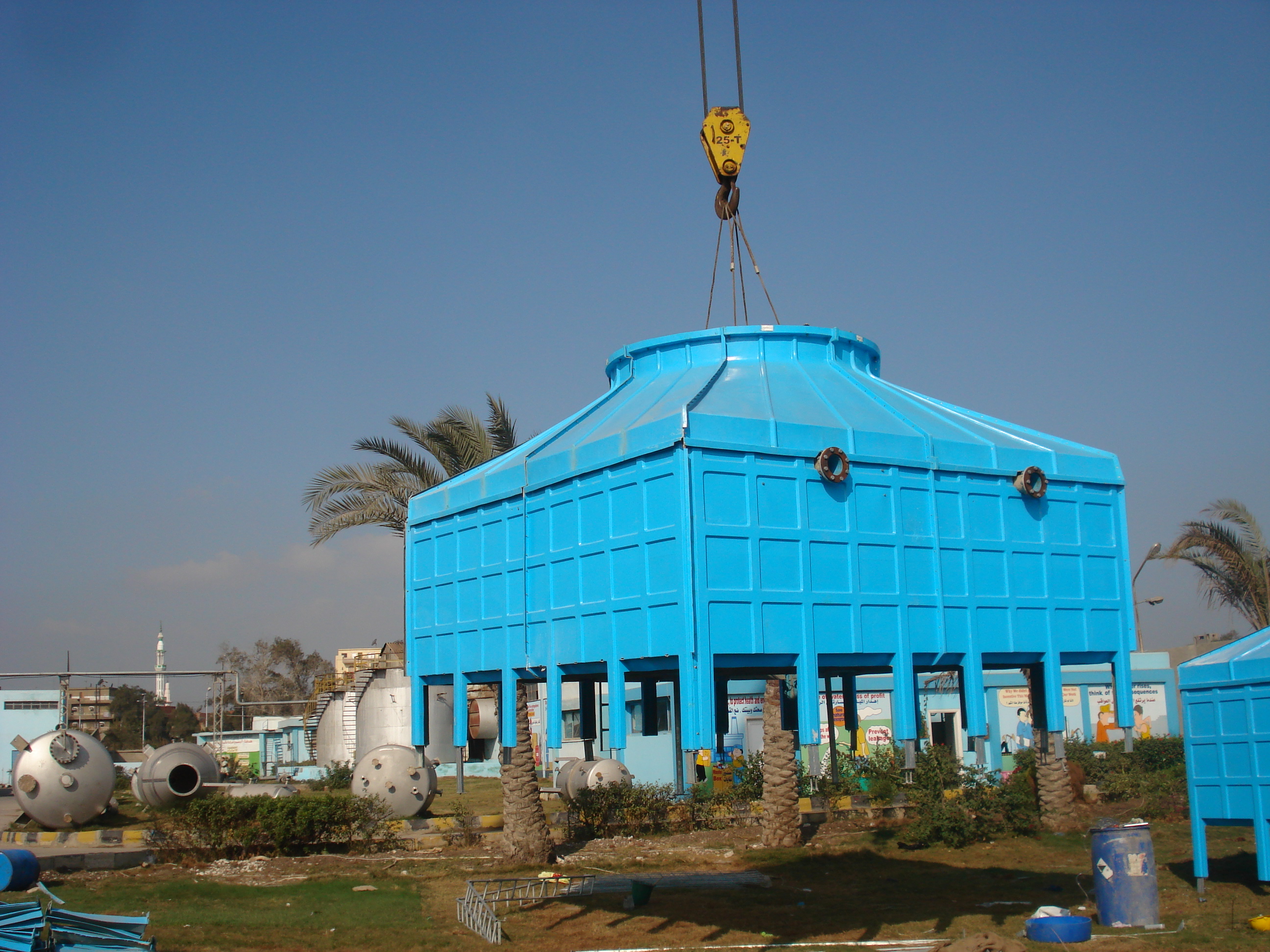
A FRP Cooling Tower is a heat rejection device that removes excess heat from industrial and commercial processes by using water as a cooling medium. These towers are constructed using FRP material, which provides high durability, resistance to corrosion, and lightweight properties.
Unlike conventional cooling towers made from metal or concrete, FRP cooling towers offer superior performance in harsh environments, particularly in industries where exposure to chemicals, moisture, and varying temperatures is high.
These cooling towers play a crucial role in industries such as power plants, chemical processing, HVAC (Heating, Ventilation, and Air Conditioning), food processing, and manufacturing units, where maintaining optimal operational temperatures is essential for efficiency and longevity.
2. Step-by-Step Working Mechanism
At United Heat Exchangers, we specialize in manufacturing high-performance FRP cooling towers designed for maximum efficiency and long-term reliability. With advancements in design, efficiency, and customization, our cooling towers continue to play a vital role in improving operational efficiency and sustainability across industries. Proper maintenance and regular inspections further enhance their lifespan, ensuring cost-effective cooling solutions for years to come.
Choose United Heat Exchangers for durable, efficient, and reliable FRP cooling towers.
FAQ
Unlike conventional cooling towers made from metal or concrete, FRP cooling towers offer superior performance in harsh environments, particularly in industries where exposure to chemicals, moisture, and varying temperatures is high.
These cooling towers play a crucial role in industries such as power plants, chemical processing, HVAC (Heating, Ventilation, and Air Conditioning), food processing, and manufacturing units, where maintaining optimal operational temperatures is essential for efficiency and longevity.
How Does an FRP Cooling Tower Work?
1. Basic Working Principle
FRP cooling towers operate on the principle of evaporative cooling, where hot water from industrial processes is cooled down through a heat exchange mechanism involving water and air. This process dissipates heat into the atmosphere while cooling the water for reuse.2. Step-by-Step Working Mechanism
Step 1: Hot Water Inlet
Hot water from industrial equipment, machinery, or condensers enters the FRP cooling tower through a network of pipes. This water carries the heat generated during industrial processes.
Step 2: Distribution System
The hot water is distributed evenly over the fill media inside the tower using spray nozzles or distribution basins. The fill media increases the water surface area to enhance heat transfer.
Step 3: Air Circulation and Heat Exchange
A fan (either induced or forced draft) draws ambient air into the cooling tower. As the air moves through the water droplets, a part of the water evaporates, removing heat in the process. The latent heat of vaporization cools down the remaining water.
Step 4: Cooled Water Collection
Once cooled, the water droplets fall into a collection basin at the bottom of the tower. The cooled water is then recirculated back into industrial systems for reuse.
Step 5: Heat Dissipation into the Atmosphere
The warm, moisture-laden air exits the cooling tower into the atmosphere through an exhaust system. This completes the cooling cycle.
Types of FRP Cooling Towers
FRP cooling towers come in different designs based on air flow direction and cooling efficiency:1. Counterflow FRP Cooling Tower
- In this design, water flows downward while air moves upward.
- Provides higher thermal efficiency as the heat exchange process is more effective.
- Ideal for applications requiring maximum cooling performance in limited space.
2. Crossflow FRP Cooling Tower
- Water flows downward while air moves horizontally across the water stream.
- Known for its lower operational resistance and easy maintenance.
- Suitable for HVAC systems and industrial cooling where moderate cooling efficiency is sufficient.
3. Induced Draft FRP Cooling Tower
- Uses a fan placed at the top of the tower to pull air upward.
- Offers efficient cooling with low energy consumption.
- Commonly used in power plants and heavy industries.
4. Forced Draft FRP Cooling Tower
- Uses a fan at the bottom to push air into the tower.
- Ensures controlled air circulation but requires higher energy input.
- Preferred for indoor applications or where external airflow is limited.
Advantages of FRP Cooling Towers
1. Corrosion Resistance
FRP material is resistant to chemical reactions, rust, and environmental degradation, making it ideal for industries dealing with corrosive substances like chemical plants and refineries.
2. Lightweight and Easy Installation
Compared to metal or concrete cooling towers, FRP cooling towers are lightweight, reducing structural load and transportation costs. Their modular design makes them easy to install and relocate.
3. High Durability and Low Maintenance
FRP cooling towers require minimal maintenance as they do not suffer from rust, scaling, or frequent wear and tear. This reduces downtime and operational costs.
4. Energy Efficiency
With optimized air and water flow designs, FRP cooling towers consume less energy while delivering superior cooling performance.
5. Customization and Flexibility
Manufacturers offer customized designs based on industrial needs, including different capacities, shapes, and airflow patterns.
Applications of FRP Cooling Towers
FRP cooling towers are widely used across various industries due to their efficiency and durability. Some key application areas include:1. Power Plants
Cooling towers help dissipate heat from turbines and condensers, ensuring optimal power generation efficiency.
2. HVAC Systems
Commercial buildings, malls, and office complexes use cooling towers for air conditioning and ventilation purposes.
3. Chemical and Petrochemical Industries
Used in refineries, fertilizer plants, and chemical factories where high-temperature processes require effective cooling.
4. Food Processing Industry
Essential in maintaining consistent temperatures in food manufacturing, dairy processing, and beverage production.
5. Steel and Manufacturing Industries
Reduces excessive heat generated during metal casting, welding, and forging processes.
6. Pharmaceuticals and Healthcare
Maintains temperature-sensitive environments in medicine production and hospital cooling systems.
Maintenance Tips for FRP Cooling Towers
To ensure longevity and optimal performance, regular maintenance is essential:- Inspect Fill Media: Regularly check for scaling, fouling, or microbial growth to maintain efficient heat exchange.
- Clean Water Distribution System: Prevent clogging in spray nozzles and basins to ensure uniform water flow.
- Check Fan and Motor Assembly: Ensure the fan blades, motor bearings, and belt drives are in good condition.
- Monitor Water Quality: Use anti-corrosion and anti-microbial treatments to prevent biofouling and scaling.
- Inspect Structural Integrity: Periodically check the FRP panels for cracks or damage caused by extreme weather conditions.
- Lubricate Bearings and Moving Parts: Ensure smooth operation of rotating components to reduce friction and energy consumption.
Pressure and Heat Capacity of FRP Cooling Towers
1. Pressure Capacity of FRP Cooling Towers
FRP cooling towers operate under relatively low-pressure conditions compared to metallic towers. Key factors influencing pressure capacity include:Operating Pressure
- FRP cooling towers typically operate at pressures between 2 to 5 bar (30 to 75 psi).
- High-pressure applications require reinforced FRP with additional layers of fiber and resin.
- Excessive pressure can lead to structural deformation or cracking.
Structural Strength Considerations
- FRP is designed for atmospheric or slightly pressurized operations.
- For high-pressure systems, additional reinforcement like carbon fiber or aramid may be needed.
- Improper pressure management can lead to stress fractures over time.
2. Heat Capacity of FRP Cooling Towers
FRP cooling towers are designed for efficient heat dissipation but have specific thermal limitations.Heat Dissipation Capacity
- The heat removal capacity depends on size, water flow rate, and ambient conditions.
- Typically, FRP cooling towers handle heat loads ranging from 100 kW to several MW in industrial applications.
Maximum Operating Temperature
- Standard FRP materials withstand temperatures up to 100°C (212°F).
- High-temperature resins (such as Vinyl Ester or Epoxy) can extend the limit to 120-150°C (248-302°F).
- Prolonged exposure to high temperatures can cause resin degradation and loss of mechanical strength.
Thermal Conductivity
- FRP has a lower thermal conductivity compared to metals like steel or aluminum.
- The efficiency of cooling depends on the design of the fill media and air-water interaction.
Why Choose United Heat Exchangers for FRP Cooling Towers?
United Heat Exchangers is a trusted manufacturer of high-performance FRP Cooling Towers in India, offering durability, efficiency, and cost-effective solutions for various industries.- Superior Quality – Made with premium FRP for corrosion resistance and long service life.
- High Efficiency – Optimized airflow design ensures maximum cooling with minimal energy use.
- Custom Solutions – Tailored to specific industrial cooling requirements.
- Low Maintenance – Rust-free, easy to clean, and cost-effective operation.
- Industry Expertise – Over 35 years of experience serving power, HVAC, chemical, and manufacturing sectors.
- Timely Delivery & Support– Competitive pricing, on-time execution, and 24/7 technical assistance.
Conclusion
FRP cooling towerhave revolutionized industrial cooling with their high durability, corrosion resistance, and energy efficiency. Their ability to handle diverse environmental conditions while providing consistent cooling performance makes them an ideal choice for various industries.At United Heat Exchangers, we specialize in manufacturing high-performance FRP cooling towers designed for maximum efficiency and long-term reliability. With advancements in design, efficiency, and customization, our cooling towers continue to play a vital role in improving operational efficiency and sustainability across industries. Proper maintenance and regular inspections further enhance their lifespan, ensuring cost-effective cooling solutions for years to come.
Choose United Heat Exchangers for durable, efficient, and reliable FRP cooling towers.
FAQ
1. What are FRP Cooling Towers?
FRP (Fiber Reinforced Plastic) Cooling Towers are lightweight, corrosion-resistant, and durable cooling systems used in industries for efficient heat dissipation. They are preferred over metal towers due to their long lifespan and low maintenance.
2. Why choose FRP Cooling Towers over metal cooling towers?
FRP Cooling Towers offer better corrosion resistance, lower maintenance, and longer service life compared to metal towers, making them ideal for industries dealing with harsh environments and chemical exposure.
3. What industries use FRP Cooling Towers?
FRP Cooling Towers are widely used in HVAC, power plants, chemical processing, pharmaceuticals, food & beverage, steel plants, and manufacturing industries.
4. How long does an FRP Cooling Tower last?
With proper maintenance, FRP Cooling Towers can last over 15-20 years, significantly outlasting traditional metal cooling towers.
5. What maintenance is required for an FRP Cooling Tower?
Regular cleaning of fill media, checking water quality, inspecting fan motors, and ensuring proper airflow help maintain efficiency and prolong service life.
6. Can FRP Cooling Towers withstand extreme temperatures?
Yes, FRP Cooling Towers are designed to operate in various climatic conditions. Standard models handle up to 100°C, while high-temperature-resistant FRP can go up to 150°C.
7. Are FRP Cooling Towers energy efficient?
Yes, they are designed for optimal heat dissipation with minimal power consumption, reducing operational costs.
8. Does United Heat Exchangers provide customized FRP Cooling Towers?
Yes, we offer customized cooling tower solutions based on industry requirements, cooling capacity, and space constraints.
9. What is the cost of an FRP Cooling Tower?
The price depends on size, cooling capacity, and design specifications. Contact United Heat Exchangers for a custom quote.
10. How can I purchase an FRP Cooling Tower from United Heat Exchangers?
You can contact us via phone, email, or our website for inquiries, technical support, and customized solutions.
Related Products


