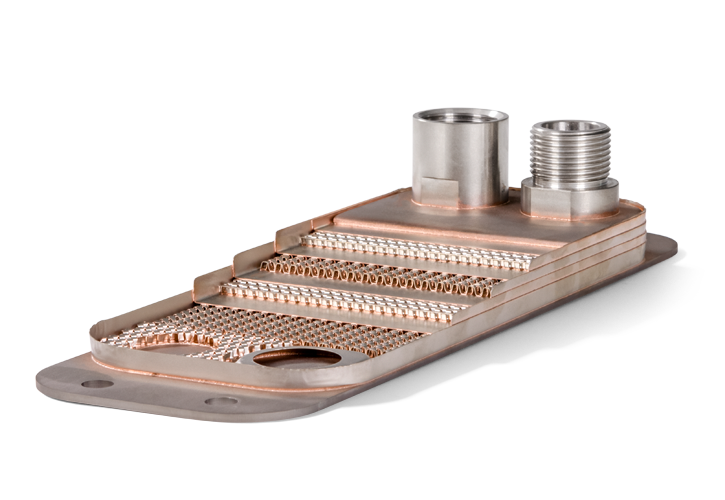
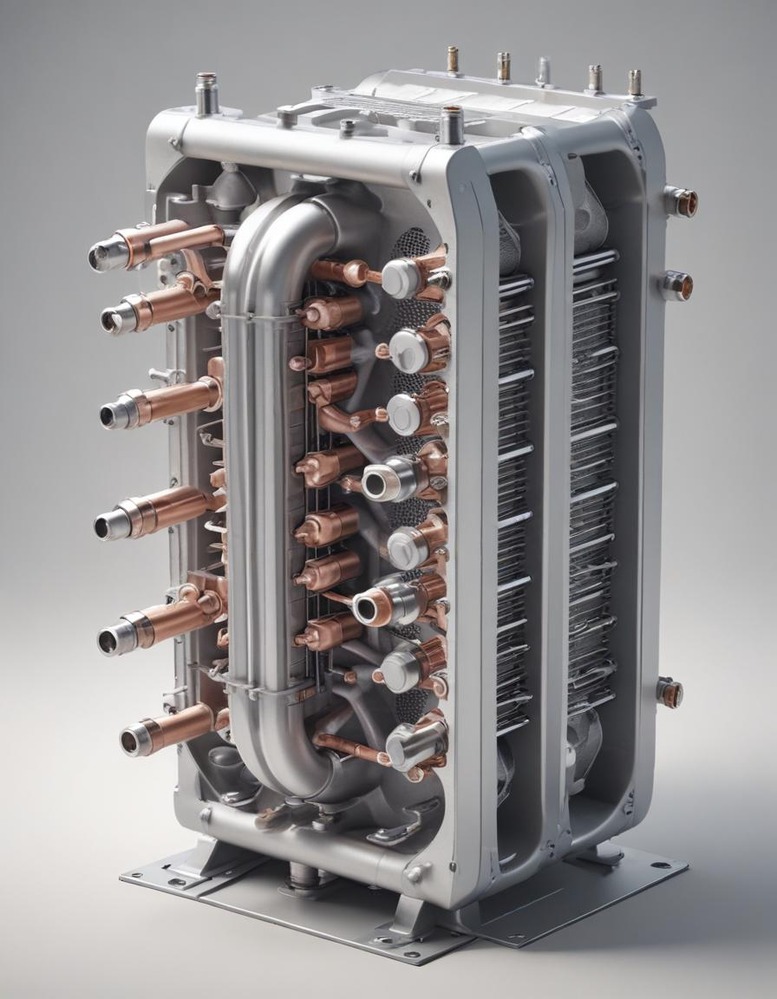
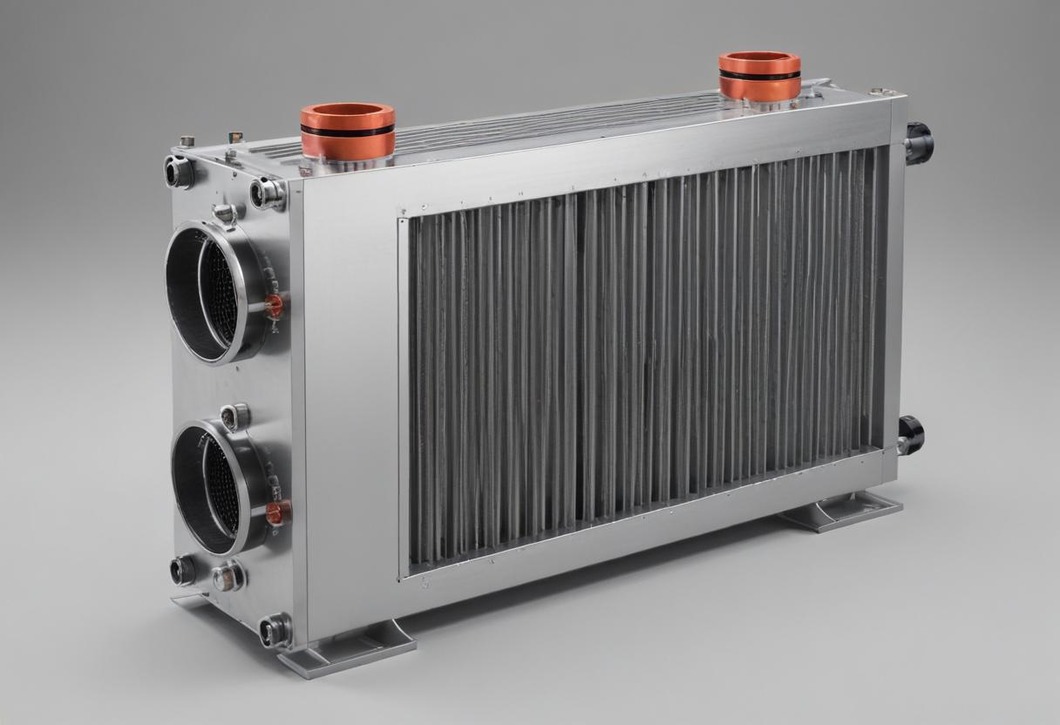
1.Plate Heat Exchangers (PHE)Stacked together, corrugated plates help plate heat exchangers transmit heat. The fluids pass via alternating channels created by these plates.
- Advantages: High efficiency, small size, simple cleaning are the advantages.
- Applications: Applications include pharmaceutical sectors, food and drink manufacturing, and HVAC systems.
2. BPHE, Brazed Plate Heat ExchangersStainless-steel plates brazed together form this exchangers' sealed unit. They are rather strong and little.
- Advantages: can manage high temperatures and pressures; no gaskets.
- Applications: Refrigeration, oil chilling, and sun heating systems are among the uses.
3. Finned Tube Heat ExchangesExtended surface (fins) on finned tube exchangers help to improve heat transmission between the surrounding air and the fluid within the tube.
- Advantages:High surface area makes advantages perfect for air to liquid heat transfer.
- Applications: Uses include air conditioning, industrial cooling, and automotive radiators.
4. Microchannel Exchangers (MCHE)Microchannel heat exchangers are tiny, parallel channels that provide effective heat transmission using little material consumption.
- Advantages: Benefits include light weight, great efficiency, and eco friendliness.
- Applications: Automotive air conditioning, heat pumps, and small cooling systems are among the applications.
5. Exchanger Spirals for HeatTwo spiral-configured fluid channels on these devices guarantees great thermal efficiency and self-cleaning characteristics.
- Advantages: Compact design; good handling of high-fouling fluids.
- Applications: Uses include pulp and paper mills, wastewater treatment, and chemical processing.
6. Heat Pipe Heat ExchangersHeat pipe heat exchangers make use of sealed tubes containing a working fluid. The fluid evaporates to effectively transport heat, then condenses to return to its natural state.
- Advantages: Excellent thermal conductivity and low pressure drop are advantages.
- Applications: Applications include aircraft, industrial, and data centres as well as ovens.
7. Graphite Block Heat ExchangersDesigned from machined tubes out of graphite blocks, these exchangers are fit for corrosive conditions.
- Advantages: Good thermal performance and great corrosion resistance are advantages.
- Applications: petrochemical companies, chemical processing.